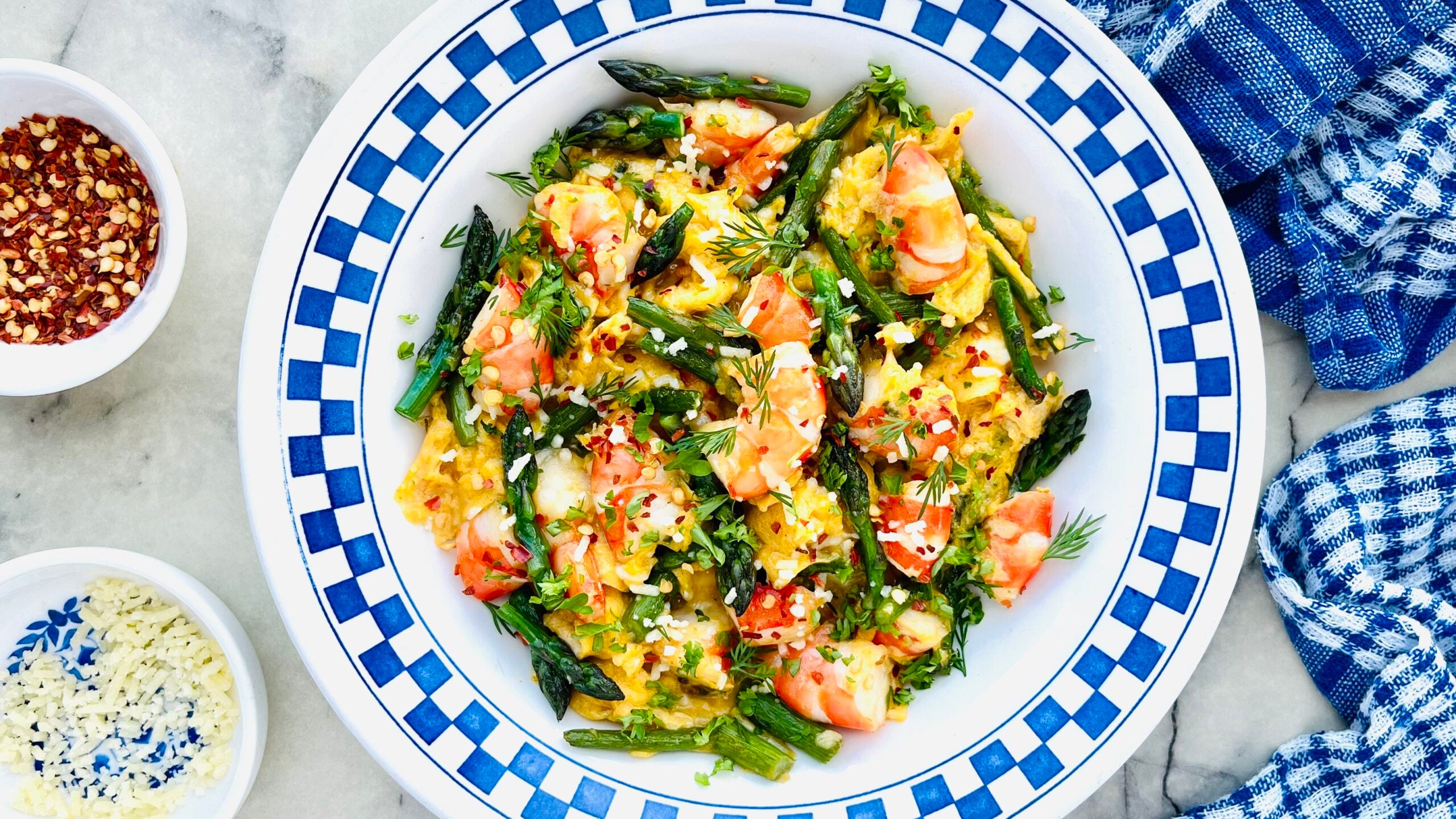
Our 25 most popular food posts in 2025 covered everything from ingredients – Calabria’s spicy spreadable pork paste ‘nduja and Cambodia’s fermented fish paste prahok to essential spices, pantry essentials and Asian noodles – to cooking gear (rice cookers, knives, kitchen thermometers), technical tips (how to pickle, boil eggs, cook rice, make croutons, and bake perfect sourdough), and restaurants (reviewing them, working in them, and being a fly on the wall in one).
As you can see, we’re easing into the new year here. While most publishers were sharing their annual 2025 round-ups last week and are posting compilations of things to cook and eat and places to go in 2026, I’ve been slow to the task, as I still had an important holiday to prepare for: this week I’ve been cooking Russian-Ukrainian Christmas food for my mum and we celebrated the Orthodox holiday yesterday on 7 January.
That means I’m also starting Dry January a week late and will continue it into February. So if you’re still deciding whether to go dry this month or not, why not join me? After a surprisingly high blood pressure diagnosis last year, I reduced my liquor intake dramatically, which I thought would be challenging for a travel and food writer who has opened a bottle of wine to have with dinner for as long as she can remember. Abstaining was easier than I thought.
As regular readers know, it’s that time of the year when we look at last year’s stats to see what recipes and travel and food stories were the most visited from the thousands of posts on our site. As readers have told us they find this exercise as fascinating and as inspirational as we do, today I’m sharing the 25 most popular food posts in 2025. Update: since publishing this, we’ve shared our 25 most popular travel posts of 2025, 25 most popular recipes of 2025 and 25 most popular culinary travel stories of 2025.
Now before I tell you more about our 25 most popular food posts in 2025, I have a favour to ask. Grantourismo is reader-supported. If you’ve enjoyed our recipes, please consider supporting Grantourismo. For instance, you could buy something on Amazon, such as one of these classic cookbooks for serious cooks or cookbooks for culinary travellers; book a cooking class or meal with locals on EatWith; or you could buy a handcrafted KROK, the best mortar and pestle ever.
And if you’re looking for more cooking inspiration, we have many hundreds of recipes from around the world in our archives from places we’ve lived, travelled and loved. Note that you can save your favourites by clicking on the heart on the right of any post to create your own private account. Now let’s share our 25 most popular food posts in 2025.
25 Most Popular Food Posts in 2025
These were the 25 most popular food posts in 2025. Hopefully they provide some cooking inspiration in 2026.
Essential Spices for Everyday Cooking
Our guide to the 10 essential spices for everyday use topped the list of our 25 most popular food posts in 2025. If you’re not already regularly sprinkling spices into dishes, these are the spices we use most, the spices you need in your kitchen if you’re not reaching for a spice rack regularly. They’re the spices that most frequently appear on our shopping list, that we encourage you to incorporate into your cooking.
If you’re new to cooking, spices are the fragrant, flavour-packed parts of plants – the seeds, roots, rhizomes, stems, flowers, fruits, barks, and resins – that are dried and sold as either whole spices, which you can use as is (eg, star anise, cinnamon sticks, cassia bark), grind at home as needed, or buy as ground spices in a powder form.
Living in Southeast Asia, we use spices daily, although we’ve used spices in the kitchen for as long as we’ve been cooking. Spices have been used for thousands of years, as much for their healing powers as for their taste and scent. One of the easiest and fastest ways to add aroma and deliciousness to a dish is to add spice.
Used sparingly these spices will add subtle flavour and fragrance to salads, vegetables, pasta, and rice. Bump them up and they’ll enhance the flavour of dishes immeasurably. Blend numerous spices to give greater depth and complexity to curries, chillies, soups, and stews.
Asian Pantry Essentials – The Must-Have Asian Ingredients
This guide to Asian pantry essentials, the must-have Asian ingredients you need to stock in your pantry for cooking Asian food, was another of our 25 most popular food posts in 2025. Our recommended Asian essentials include everything from fish sauce, soy sauce and hoisin sauce to ingredients we love such as Chinkiang vinegar and Doubanjiang. We use these sauces, syrups, vinegars, and condiments nearly every day here in Cambodia.
We typically keep our Asian pantry stocked with everything we need to make our favourite Asian dishes and recipe test for the epic Cambodia cookbook we’ve been working on. While the kitchen cupboards are filled with Asian pantry essentials that most Asian food lovers would know, such as oyster sauce and chilli crisp, it also includes ingredients that some home-cooks might be less familiar with.
Below you’ll find a list of Asian pantry essentials that we consider pantry staples – the Asian ingredients we can’t live without. Of course there are other items in our pantry, such as peanut oil for its high smoke point for deep frying and, of course, Sriracha sauce – both the Huy Fong Sriracha brand from the USA, as well as the original Sriracha brands from neighbouring Thailand.
Asian Pantry Essentials – Must-Have Asian Ingredients You Need In Your Pantry
How to Make Croutons from Stale Bread So Good You’ll Want to Snack on Them
This guide to how to make croutons from stale bread that taste so good you’ll want to snack on them, will ensure you don’t waste stale bread again. Homemade croutons taste so much better than store-bought croutons, last for ages, and are super versatile, adding texture and crunch to soups, salads and pastas. You’ll be saving bread just to make our homemade croutons.
Another of our 25 most popular food posts in 2025, this guide to making homemade croutons will make you crunchy croutons to use whole, break into smaller croutons or crush into crumbs. There are so many ways to use croutons to add texture to salads, pastas and soups. We use croutons in French onion soup, as vehicles for Spanish tapas and Basque pintxos, and to sprinkle on gazpacho and other soups.
Making croutons is one of the best ways to use up stale bread and our homemade croutons recipe will make you croutons from days-old bread that are so delicious you’ll want to munch on them as a snack. After making them, you’ll be making sure you always have some on hand. Fortunately homemade croutons last weeks in well-sealed glass jars or air-tight plastic containers so you’ll never waste stale bread again.
Whether it’s that second picnic baguette you bought that didn’t get eaten, your home-baked sourdough ends you waste every week, or those last few slices of an expensive bakery loaf, all can be transformed into delicious croutons you’ll want to make time and time again.
How to Make Croutons from Stale Bread So Good You’ll Want to Snack on Them
How to Review Restaurants Like a Professional Restaurant Critic
“How to review restaurants like a professional restaurant critic isn’t a post I envisaged ever writing here,” Terence writes. “It’s the sort of thing Lara covers in our food and travel writing retreats – however, comments by a food journalist and people we met on our recent trip suggested there was a need.”
“Everyone’s a critic these days when it comes to food. We know people who seem to work as hard on their reviews for sites like Zomato, Yelp and Trip Advisor as we do on a writing gig for which we’re getting paid. But reviewing food with a level of sophistication requires knowledge that only comes with years of continually eating out, cooking, researching, and learning how to evaluate food.”
Terence’s post was a response to us running into a young Asian journalist on our way into the World’s 50 Best Restaurants awards in Melbourne some years ago. We remembered meeting her at an event in Bangkok the previous year. At that time she’d been eating at all the usual restaurants in the city that writers eat at when they’re in town. She had criticisms of all of them, however, those criticisms were naive.
“One statement she had made that stood out was her critique of Nahm restaurant, which David Thompson helmed at the time,” Terence continues. “She said that the food was “unnecessarily hot”. Given that the chef and his team of Thai-born chefs are mostly cooking from old Thai recipes, some of which date as far back as the mid 1800s, it was odd to suggest that the chef and his team were making dishes hotter than the canonical recipes they’d extensively researched.”
“So where were these criticisms emanating from and why?” Terence questions. “A few self-confessed ‘foodies’ had said to Lara that they’d had better Thai in Melbourne at Thai restaurants that simply don’t rate with those who actually know Thai food, but generally they were coming from online ‘reviewers’, most of whom I never pay any attention to, but looked into as research for this piece.” Read more below.
How to Review Restaurants Like a Professional Restaurant Critic
Dispelling Cambodian Cuisine Myths – It’s Not ‘Mild Thai’!
Dispelling Cambodian cuisine myths seemed to have become our part-time occupations for a while there. Not that we minded. No other Southeast Asian cuisine is so misunderstood and so under-appreciated – nor deserving of more attention. In this post, which was another of our 25 most popular food posts in 2025, we set a few things straight.
Most visitors to Cambodia’s Siem Reap that we meet know little or nothing about Cambodian food and what they think they know is often incorrect. You can’t blame them, of course, because most travel and food stories unfortunately also get it wrong.
Journalists on junkets learn what they know from hotel cooking school instructors – and they don’t always get it right either. At a recent cooking class that Terence observed at a newish five-star Siem Reap resort, the young instructor was guilty of all sorts of Khmer cooking crimes, including adding oyster sauce to a red curry.
Hotels and restaurants here are also guilty of doing little to educate diners about their food. A short intro to Cambodian cuisine from the restaurant manager or a paragraph at the beginning of a menu would go a long way to educating guests so that they form realistic expectations.
The rich cuisines of Cambodia and Laos, while sharing common elements are also quite distinct, just as the cuisines of Thailand, Vietnam and Myanmar are “same same but different”, as the t-shirts say. We look at the myths about Cambodian cuisine and dispel some of those.
Things to Make with a Mortar and Pestle from Pesto to Pastes
Our guide to things to make with a mortar and pestle was another of our most popular food posts in 2025. Our mortar and pestle is one of our most-used Asian cooking utensils in our kitchen in Cambodia. It’s easy to use, it will give your arms a good workout, it cleans quickly and easily, and pounding with a pestle in a mortar is therapeutic – especially in contrast to blitzing something in a blender.
In Siem Reap, we mainly use a mortar and pestle for making Cambodian herb and spice pastes and Thai curry pastes, which we think are some of the things everyone should master to become a better cook. Terence uses a big granite mortar and pestle he bought way back in 2012 after we moved to Phnom Penh, while I’m fond of the beautiful KROK mortar and pestle, hand-crafted in an artisanal village of mortar and pestle makers in Thailand.
Here in Australia, where I’m currently taking care of mum, I’ve been using an Italian marble mortar and pestle to make basil pesto for pastas and salads, as well as pound dried spices, nuts, seeds, herbs, and breadcrumbs for condiments such as dukkah, pangrattato, gremolata, and more. Tips to how to use a mortar and pestle here.
Things to Make with a Mortar and Pestle from Pesto to Pastes + Recipes
How to Bake a Perfect Sourdough Loaf – My Secrets to Sourdough Baking
How to bake a perfect sourdough loaf was something that obsessed Terence, an avid sourdough baker, there for a while: what was his idea of a perfect sourdough loaf. Until he finally found himself baking it, many bakes in a row, week after week. In this post he shares his quest for the perfect sourdough loaf and perfect sourdough crumb, and some secrets to sourdough bread baking he learnt so you can bake your perfect sourdough.
Successful sourdough baking is dependent on so many variables: types of flour, types of starter, hydration levels, bulk fermentation times, interactions like folding, scoring, baking temperature, room temperature, water temperature, vessels used to bake the bread with, oven types… the list goes on forever.
Because Terence had been baking sourdough bread for seven years (and baking in some capacity for over 35 years) when he wrote this post, he’d seen it all in terms of results. Dense flat loaves. Dense flat loaves with strange ‘tunnels’ through them. Slightly less dense loaves with holes on one side or just the top of the loaf… that’s a long list, too.
Despite my encouragement, he writes of – “we can make Tuscan bread soup with this one…” I’d assured him, and “this will be great for panzanella!” – he found the failures to be disheartening. But he was determined not to give up, as he found the rewards of sourdough baking to be so wonderful.
If you’re new to baking sourdough, start with Terence’s ultimate guide to sourdough baking, which includes everything from a beginners guide to baking sourdough and a simple sourdough starter guide to his list of essential sourdough tools to get you started and plenty of sourdough starter discard recipes. But if you’ve been baking sourdough for a while, then read this post for tips to baking your perfect sourdough.
How to Bake a Perfect Sourdough Loaf – My Secrets to Sourdough Baking
Beginners Guide to Pickling – How to Pickle Almost Anything
Another of our 25 most popular food posts in 2025, this beginners guide to pickling is a straightforward introduction to how to pickle almost anything – a pickling basics or Pickles 101, if you like. It’s for people like us, people who adore pickles and who have always wanted to do some pickling, but were intimidated or didn’t think they had time to start preserving things in jars.
Having grown up munching on my Russian-Ukrainian grandparents homemade dill pickles, made from the bounty of beautiful organic produce my grandfather grew in the backyard veggie garden (when he wasn’t distilling vodka in baboushka’s laundry), I’ve been addicted to pickled gherkins since I was a little kid.
Wherever Terence and I have lived in the world – and we’ve lived in places where pickling is part of the culinary culture, everywhere from the Middle East to Southeast Asia – I’ve always made sure we had a jar of Polski Ogórki in the fridge. The Polish-style dill pickles are the closest in taste to my baboushka’s gherkins. When Baba was older and too tired to pickle, she’d buy jars of the stuff. When she and Papa were younger, they were always pickling.
I’d eat dill pickles with rollmops and Eastern European-style black bread if I could get my hands on either, but until then I’m content to savour slices of gherkins with cheese on Terence’s sourdough bread, or as a side to a Russian feast of pelmeni and vareniki, cabbage rolls, and a pink potato salad. Terence puts dill pickles in his heavenly homemade tartare sauce.
What Is ’Nduja and How Do You Use It – Our Guide to Calabria’s Spicy Sausage Paste
What is nduja, how do you use ’nduja and where do you buy ’nduja? Here’s our guide to Calabria’s spicy spreadable pork paste that is so beloved in its birthplace of Spilinga that they even have an annual Festival del ’Nduja or Festival of the Spicy Sausage Paste. A quintessential product of Calabrian cuisine, it’s one of our favourite ingredients.
’Nduja was a revelation when we first sampled the fiery Calabrian pork paste at a salumeria in Italy’s capital Rome in the spring of 2008. Yes, it made such an impression we remember the place and date. While ’nduja was well-known to Italian food-lovers, and beloved in its birthplace of Calabria in Southern Italy, where it’s regularly eaten on everything from bread to pizza, its popularity hadn’t yet spread across the globe.
It certainly would have been possible to find ’nduja in Italian delicatessens in the Calabrian diasporas in Europe, USA, South America, and Australia – of the many millions of Italians who emigrated from the 1870s to 1970s, the majority were from Southern Italy’s regions of Calabria and Sicily – however, it wasn’t yet on restaurant menus around the world.
Now it seems Calabria’s fiery pork paste is popping up everywhere. We were even able to get our hands on some fantastic ’nduja here in Cambodia recently. We thought that was as good an excuse as any to tell you all about the Calabrese sausage paste and share some of our best ’nduja recipes. If you can’t source ‘nduja locally, you can buy ’nduja online. This guide to ‘nduja was another of our 25 most popular food posts of 2025.
What Is ’Nduja and How Do You Use It – Our Guide to Calabria’s Spicy Sausage Paste
How to Cook Rice Around the World – 66 Rice Dishes and Rice Cooking Tips from 65 Experts
This is our guide to how to cook rice around the world, according to experts across the globe: chefs, street food cooks, food writers, cookbook authors, culinary guides, hosts of pop-ups and supper-clubs, and even a former MasterChef contestant or two, who have provided tips to cooking rice dishes, from congee to curd rice, fried rice to rice desserts. It was another of our 25 most popular food posts of 2025.
Our rice cooking experts share advice on how to cook rice dishes from all corners of the globe, everywhere from Afghanistan to Australia, India to Indonesia, from a traditional Cambodian rice dish cooked on the open fire to a playful rice re-invention in a sleek Singapore restaurant kitchen.
To learn how this celebration of the diversity of rice dishes and the countless ways rice is cooked around the world came about, see my post, Make Rice Not War, a call to rice lovers to open their minds to different ways of cooking rice other than their own. My aim was to inspire curiosity in how others cook rice in their homes, on the streets, in restaurants, and in communities, in their countries of origin and adoption, and in diasporas around the world.
Rice dishes are organised by the country of the expert nominating the dish, as that’s where they are cooking them, however, the place of origin is described in the text. Food travels and dishes evolve and that’s part of the point of the exercise. Countries are listed in alphabetical order because #MakeRiceNotWar.
How to Cook Rice Around the World – 66 Rice Dishes and Rice Cooking Tips from 65 Experts
12 Dishes Beginner Cooks Should Learn from a Good Soup to a Great Salad
These are the essential dishes beginner cooks should learn to make to build a repertoire of basic recipes that cover every meal, from breakfast to lunch and dinner. They include recipes for perfect boiled eggs, French toast and rice porridge, a great salad and classic vinaigrette, poached chicken, homemade hummus, a soup, pasta, meatballs, a chilli, braised chicken and a vegetable side.
After we shared Terence’s guide to ten dishes to master to become a better home cook, a new reader, who said she was just starting to learn to cook, asked if we could share the essential dishes beginner cooks should learn to make for basic dishes that cover every kind of meal. She wanted simple recipes she could learn to cook for herself, as well as easy dishes she could make for guests.
I assumed our new reader was young and had just moved out of her parent’s home. Until she revealed that she’d just separated from her chef husband of a decade and had never had to cook. They dined out all the time, and as her ex owned a daytime café, he’d cook dinner when they ate at home. It’s never too late to learn to cook, no matter what your age.
During my time in Australia caring for my mum this year I’ve shopped at Aldi daily, just as we’d shop the local markets at home in Siem Reap. Barely a day goes by when a fellow shopper doesn’t ask me for advice, and they’re not always young. Yesterday, a late middle-aged couple asked me what to do with fresh asparagus. I shared tips and they said they were excited to make dinner that night. If you’re new to cooking, I hope this post inspires you.
12 Dishes Beginner Cooks Should Learn from a Good Soup to a Great Salad
Asian Noodle Guide – Types of Asian Noodles, Noodle Recipes, Buying Tips
Another of our 25 most popular food posts of 2025, our Asian noodle guide covers the most popular types of fresh and dried Asian noodles, and how to use the noodles, with links to noodle recipes for each type of noodle, and tips to shopping for noodles in Asia and the rest of the world. If you’re an Asian noodle lover, save this page, as we’ll add more recipes for noodle dishes from time to time.
I have to confess that I was suffering noodle withdrawal symptoms soon after I arrived at my mother’s home in regional Australia. Local supermarkets had only a fraction of the types of noodles you can find in big multicultural cities such as Sydney and Melbourne, and only a handful of instant ramen brands. It was so depressing I couldn’t bring myself to cook Asian food.
Back in Cambodia’s Siem Reap, our home for the last 12 years, our best supermarket has a long aisle devoted entirely to dried noodles. There are hundreds of packets of noodles and scores of different types of noodles from every country in the region, with even more fresh noodles vacuum-packed in the cold section.
Local markets sell fresh noodles, such as the fresh-daily rice noodles called nom banhchok in Cambodia and kanom jeen in Thailand; fresh rice pin noodles or silver needle noodles, used to make Cambodian lort cha; and the flat wide rice noodles called sen yai in Thai, used in pad see ew in Thailand. Here’s our Asian noodle guide to the most popular types of Asian noodles and recipes to use them in.
Asian Noodle Guide – Types of Asian Noodles, Noodle Recipes, Buying Tips
Prahok, the Secret Ingredient of Cambodian Cuisine
Prahok is the most distinctive ingredient in Khmer cooking, alongside the Cambodian curry paste called kroeung. This chunky, grey, visually unappealing, fermented fish paste is used by every Khmer cook to add depth of flavour to just about every dish in their Cambodian cuisine repertoire.
Most visitors to Cambodia don’t have to fear this pungent fermented fish paste called prahok as it’s either used very sparingly or not at all in Cambodian dishes that they’ll be served in most tourist restaurants in Siem Reap. While this might appear to be a contradiction of the statement I made in the opening, Cambodian restaurateurs have long known that local levels of prahok served in a Cambodian dish placed in front of a foreigner is not going to elicit a positive response.
In fact, when interviewing Cambodian chefs at a well-known Siem Reap restaurant, I asked them what they thought would happen if they cooked their restaurant dishes just like they would at home and the answer was startlingly clear. “We’d go broke,” they said, as their use of the fermented fish paste in their domestic cooking is liberal to say the least. So why is this olfactory-offending fish condiment so important to the Khmer cuisine of Cambodia?
10 Dishes to Master to Become a Better Home Cook from an Omelette to a Curry
These 10 dishes to master to become a better home cook include essential egg dishes – an omelette to help you perfect your pan skills and eggs Benedict to fine-tune egg poaching techniques – savoury classics such as a roast chicken and a traditional stew, Asian favourites (a Thai curry and Chinese special fried rice), and a crowd-pleasing dessert, a chocolate lava cake.
If there was something good to come from the pandemic it was that lockdowns and time spent self-isolating at home gave us all plenty of opportunities to improve our skills as home cooks, learn new techniques, and embark on cooking projects, such as baking sourdough. Just because the pandemic is over (touch wood!) doesn’t mean we need to stop learning to be better cooks.
If you’re keen to take your cooking skills to the next level, instead of just concentrating on improving one skill, such as dumpling-making, Terence has got ten dishes for you to perfect, which will enable you to become proficient in a number of cooking techniques, from poaching eggs and making béchamel sauce to learning how to use a mortar and pestle and fill pasta.
Mastering all of these dishes will undoubtedly make you a better home cook and the skills you’ll develop lend themselves to other dishes. Learning to use a mortar and pestle for the Thai curry recipe provides a gateway to making other homemade curry pastes, while learning to make a hollandaise sauce opens up a world of other sauces such as Béarnaise. This was another of our 25 most popular food posts of 2025.
10 Dishes to Master to Become a Better Home Cook from an Omelette to a Curry
10 Things I Learnt Working in Restaurant Kitchens That Are Useful in Home Kitchens
“Ten things I learnt working in restaurant kitchens include everything from the value of maths and mise en place to the importance of being clean and organised, why it’s essential to taste, taste and taste again to the value of perfect soffritto. All are incredibly useful in the home kitchen,” Terence writes.
“I’ve been fascinated by cooking, food and restaurants since I was a child growing up in Australia. I loved the whole experience. I cooked with my mum. I had my own garden at age fifteen. And I loved going to family dinners at restaurants for special occasions. When I was in my early twenties I became even more obsessed with all things culinary.”
“Thankfully, I had a then-girlfriend (now wife, Lara) who shared my love of eating out and cooking at home. Things really took hold when we ate at a restaurant, fell in love with the food, and if the chef had a cookbook I bought it and learnt the dishes in it. I still cook recipes from some of those Australian chefs’ cookbooks, such as Neil Perry’s Rockpool and Tetsuya Wakuda’s Tetsuya.”
“This cooking lark was a relaxing pastime until Lara went to South America to do research for her Master’s degree. I wanted to be a better cook and I knew that taking this cooking hobby further could be a way to stay grounded while she was away. The drummer in my band, John, was a chef who owned a little Italian joint in Sydney’s Surry Hills that was a café by day that doubled as a pasta restaurant at night.”
“So many a night after finishing my day job running a design department for a publishing company, I’d head to John’s restaurant to learn how to cook in a commercial kitchen. What could possibly go wrong with spending my nights at a restaurant run by the madcap drummer of my post-punk pop band? In the kitchen, John taught me so much. As have other professional chefs over the years. So here are 10 things I learnt working in restaurant kitchens.”
10 Things I Learnt Working in Restaurant Kitchens That Are Useful in Home Kitchens
Essential Kitchen Utensils, Cooking Tools and Gadgets I Can’t Live Without
The kitchen utensils, cooking tools and gadgets I can’t live without are basic cooking utensils. When I found myself setting up a kitchen from scratch, it was these fundamental kitchen tools I was missing most from our kitchen in Siem Reap. Sure, a Kitchen Aid blender would be nice, but it wasn’t fancy machinery I was missing, it was the simplest and most essential kitchen gadgets.
I’m sharing my list of essential kitchen utensils, cooking tools and gadgets that I can’t live without, in case you find yourself setting up a kitchen for the first time. Whether you’re a novice cook moving into your first home and setting up your first kitchen, or you’re an experienced cook moving interstate or overseas, or returning back home from abroad and re-equipping a kitchen, this is what you need.
For the first time in my life, after returning to Australia to stay with mum, I found myself re-equipping a kitchen that had been neglected, as my elderly mum had sadly lost interest in cooking. The grill and oven – which hadn’t been used since Terence baked a batch of homemade meat pies for mum to freeze on our last trip to see her, the year before the pandemic – were full of cobwebs.
Aside from the top cutlery drawer, the other kitchen drawers hadn’t been opened in years and were full of dusty cooking utensils that were blunt, tarnished, rusted, and stuck together. No amount of cleaning products, vinegar or baking soda (I researched all the home remedies), or heavy-duty scouring would clean them or prize them apart. So I found myself re-equipping a kitchen for the first time in years. If you find yourself in the same situation, here’s what you need.
Essential Kitchen Utensils, Cooking Tools and Gadgets I Can’t Live Without
What To Do If You’re Unhappy With Your Restaurant Meal
What to do if you’re unhappy with your restaurant meal depends on what was wrong with the meal. Whatever you do, don’t sit there and stew in silence, composing a Trip Advisor review in your head. Speak up and let the restaurant manager know. You may leave having had a better time than if you hadn’t complained.
As food and travel writers of decades experience, who wrote dozens of travel guidebooks and hundreds of stories over many years, we have literally reviewed many thousands of restaurants. We’ve heard countless diners complain about their bad experiences at restaurants, and we’ve heard an equal number of chefs, restaurant managers and waiters complain about customers.
While we sympathise with chefs who get orders for “chilli crab – no chilli” and complaints that diners’ food was cold (only to learn later that the waiters stood gossiping for ten minutes with the customers’ plates in their hands), sometimes it’s hard to empathise with diners who don’t speak up and give restaurants a chance to address the issue.
After so many years doing this work, we have theories why they don’t. People see the decisions they make – whether it’s a restaurant to dine at or hotel to check into – as reflections of their taste and their ability to make good choices. If they select a restaurant that’s disappointing they may see this as their own poor judgement and nobody wants to admit making a bad call. This is why so many people tend to exaggerate a problem – especially on Trip Advisor.
The thing is that if there’s a problem or series of problems, it’s far better to speak up at the restaurant – when there’s a problem during your meal, not as you’re walking out the door – to give the restaurant a chance to fix things so that you leave on a high. Here’s what to do if unhappy with your restaurant meal.
Essential Sourdough Baking Tools to Make Your Baking Life Easier
If you’re just starting to bake sourdough bread, take comfort in the fact that you don’t need to invest a lot of money in expensive kitchen equipment to make sourdough. That was a myth perpetuated during the sourdough backlash. In fact, if you cook and bake and already have a well-equipped kitchen, you probably have all the essential sourdough baking tools you need.
The only things we didn’t have in our Siem Reap kitchen when I first started baking sourdough seriously some years ago was a Dutch Oven and a banneton or proofing basket, however, I was able to procure a banneton from Lara’s basket collection and I’d always intended to buy a Dutch Oven eventually.
The Dutch Oven was a great investment, because I not only use it every few days to bake sourdough, we use it for roast chicken and stewsm and I use the lid to make my Dutch Oven pizzas. It’s definitely worth investing in a good Dutch Oven if you don’t already own one. If you are new to sourdough baking, do take a look at my comprehensive sourdough guide, which covers everything you need to know about baking sourdough.
Essential sourdough baking tools and kitchen utensils for those beginning their sourdough journey include sourdough starter containers such as glass mason jars, good digital scales, a dough whisk, a banneton or proofing basket, dough and bench scrapers, a stainless-steel mixing bowl, and a Dutch Oven. These are my essential sourdough baking tools.
Essential Sourdough Baking Tools to Make Your Baking Life Easier
How to Cook Your Way Around the World – Tips for Travel-Loving Chefs and Cooks
How to cook your way around the world is probably something you’ve pondered if you’re a young chef, culinary school graduate, aspiring chef, serious home cook, culinary writer, caterer, or even an experienced chef who hasn’t worked abroad. If you love to cook, you love to travel and you mainly travel for the food, then here are some tips to cheffing around the world.
If you’re a chef keen to cook your way around the world, it’s never been easier. Once upon a time you had to have good connections to find a job as a chef in a good restaurant overseas, especially in cities such as London, Paris or New York.
These days, all you have to do is search for ‘chef jobs abroad’ on Jooble or a similar job site and you’ll find chef jobs at David Chang’s Momufuku, Michelin starred restaurants in Europe, and luxury cruise ships such as Seabourn. That’s just what my quick search revealed a few days ago.
But if that’s all there was to it, then I wouldn’t be sharing this little guide to how to cook your way around the world. Plus, there are more job opportunities for chefs than cooking in fancy restaurants, and high-pressured restaurants at that, which might not be every chef’s cup of tea – or coffee. There are also opportunities for cooks who aren’t yet chefs.
How to Cook Your Way Around the World – Tips for Travel-Loving Chefs and Cooks
8 Essential Knives for Home Cooks from Chef’s Knives to Chinese Cleavers
“My 8 essential knives for home cooks feature chef’s knives you’ll want to use for the rest of your life and kitchen knives that are so inexpensive you can buy a few. You’ll find everything from my favourite knife, a Global 6″ chef’s knife, to a cleaver, both of which were packed in my suitcase whenever we travelled,” Terence writes.
These 8 essential knives for home cooks are the must-have knives you need for your home kitchen or whether you’re an avid cook embarking on a long-term road trip who is setting up an RV, campervan, motorhome or caravan kitchen or you’re dreaming about a long-term food-focused trip in the future and you’re already drafting a packing list.
If you’re not planning on cooking when you’re away and taking your knives travelling, as we do, then our recommended knives for home cooks might be of help if you are setting up a home kitchen for the first time or down-sizing your current kitchen and re-thinking the essentials. This was another of our 25 most popular food posts of 2025.
8 Essential Knives for Home Cooks from Chef’s Knives to Chinese Cleavers
Want to Be a Better Home Cook? Work in a Restaurant Kitchen
Terence’s post on ‘Want to Be a Better Home Cook? Work in a Restaurant Kitchen’ was another of our 25 most popular food posts in 2025. Terence writes: “Watching Rene Redzepi’s chefs from Noma work in the kitchen at Nahm restaurant in Bangkok over a couple of days, reminded me how my professional kitchen experience completely changed the way I cook at home. I thought I’d share some of the things I learnt in a ‘real’ kitchen for those of you who want to be better home cooks.”
“Even if you’re a keen home cook who has no intention of going on a reality TV cooking show like MasterChef or My Kitchen Rules, favourites in Australia, your best investment isn’t necessarily that fancy set of kitchen knives or a sous-vide machine.”
“Just being in a professional kitchen for a day, a few days, or a week will change your cooking habits for the better. Here’s how my experiences in professional restaurant kitchens made me a better home cook, from learning how to calculate food costs and portioning to practicing good hygiene.”
How to Get Out of a Cooking Rut and Get Excited About Cooking Again
How to get out of a cooking rut isn’t hard when you know how. Whether you’re a working parent who dreads the thought of meal planning for a week, a single person who doesn’t enjoy cooking for one, you’re just too busy, or you’re bored with the same handful of dishes you have on repeat, we’ve got loads of ideas for how to learn to love to cook again.
If you once enjoyed cooking, but these days dread the thought of it – you struggle to make dinner, would rather get take-away, home-delivery, or pack the freezer with ready-meals; or you cook, but barely cook more than the same few dishes, over and over again – then I’ve got loads of suggestions for getting out of that cooking rut and learning to love the kitchen again.
I know all about cooking ruts. I love to cook now, especially for loved ones. Few things give me more pleasure. I grew up with grandmothers who thought nothing of shopping every morning and cooking all day to create delicious comforting meals for their families. Some of my fondest childhood memories are making dumplings with my baboushka and peeling peas with my nanna.
These days, I love to cook so much that some mornings I wake up having dreamt of new dishes. I adore researching food, replicating family dishes and developing new recipes. But then that’s part of what I do for a living. I don’t have to get kids to school, race to get a train, spend a day in an office, and cook dinner soon after I get home. Cooking is part of my day and a very satisfying one. Here’s how you can make cooking fun again for you.
How to Get Out of a Cooking Rut and Get Excited About Cooking Again
Behind the Scenes at Michelin Starred Reflets Par Pierre Gagnaire in Dubai
“One of the best things about our work as a food and travel writer and photographer team is that we get to spend time in some of the world’s best restaurant kitchens,” Terence writes. “One of our most memorable experiences was spending a night behind the scenes at Reflets by Pierre Gagnaire in Dubai. These are my reflections from a Michelin-starred chef’s kitchen.” Terence’s reflective story was another of our 25 most popular food posts of 2025.
“Literally months after opening in Dubai, Reflets Par Pierre Gagnaire landed on the San Pellegrino World’s Best 100 Restaurants list. It was the only restaurant from the Middle East to make the grade back then. In doing so, it became the restaurant that set the standard for fine dining in Dubai, a city where the term had been used far too loosely until then.”
“On the first night of a weeklong visit by the fêted French chef to his Dubai restaurant, Lara and I got to slip behind the velvet cocoon of the dining room into the kitchen with the man himself. Our aim was to see just what makes the restaurant – and the chef – one of the world’s best for a magazine story.”
“Notebook in hand and my camera around her neck, Lara was a fly on the wall for the night. I was hands-on in between taking photos, learning how to prep a dish or two, and by the end of the night actually prepped Chef Gagnaire’s dinner. But that’s another story. Here are our observations from that night…”
Behind the Scenes at Michelin Starred Reflets Par Pierre Gagnaire in Dubai
Pro Chef Lessons for Home Cooks – Precision in the Kitchen and Why Size Matters
“Pro chef lessons for home cooks – or travelling cooks, if you’re cooking in a holiday house or apartment rental kitchen – is a subject I’ve been mulling over, so I thought I’d share some of the cooking tips I’ve picked up from the experts, starting with a lesson about precision,” Terence writes.
“Over the years, during the course of our work as travel and food writers, I’ve spent a lot of time with chefs in their restaurants, observing them at work, photographing their food, sitting down to do interviews, and even cooking in their kitchens,” writes Terence. “I can’t recall who was the first chef we got to chew the fat with, because chatting to chefs after a meal was just something that Lara and I found ourselves naturally doing over the years.”
“But some stand out: the night our fly-on-the-wall reporting at Reflets in Dubai resulted in me cooking dinner for chef Pierre Gagnaire (and learning the secret to his Côte de Bœuf); two days spent with Rene Redzepi and chefs Beau Clugston and Thomas Frebel in the kitchen at Nahm, Bangkok; the chef in Jordan who took us on a street food tour of Amman; and an afternoon spent with a zen vegetarian chef in the calmest Michelin-starred kitchen ever in Milan.”
“I’ve always left those experiences and interviews, informal or otherwise, with a few pro chef lessons for home cooks that stayed with me – expert tips I’ve been able to put to use in our home kitchens over the years. I thought it time to share some of those pearls of cooking wisdom with you, starting with a lesson in precision in the kitchen and why size matters from chef Dan Hunter, one of the finest chefs cooking contemporary Australian cuisine.”
Pro Chef Lessons for Home Cooks – Precision in the Kitchen and Why Size Matters
The Rice Cooker – For Cooking Asian Food This Is the First Thing You Should Buy
A rice cooker is the first thing you should buy when you want to seriously cook Asian food, especially Southeast Asian food. Not a wok, not a cleaver; they can wait. It’s a rice cooker or rice steamer that you need to make a priority to buy when you’re setting up your kitchen to cook Southeast Asian cuisines.
Why? We know how to steam rice on a stovetop just fine and you probably do, too. But it doesn’t go right every time. When the rest of your meal is ready and you find you’ve overcooked the rice or worse, do you really want to keep other people waiting while you try it again? No.
An Asian kitchen essential, a decent home rice cooker, also called a rice steamer, these days costs around $US50. If you cook Asian food often, it’s the best fifty bucks you’ll spend for the kitchen. We live in Siem Reap, Cambodia, where everyone owns a rice cooker. We use our rice cooker almost every single day of the year.
Ask a Cambodian if they make rice on a stove and they’ll laugh. Locals use rice cookers to steam rice and make rice porridge. Unless they live in a remote village without electricity, when they’ll cook rice in a pot over fire. Otherwise, a rice cooker is used, and locals always make more rice than needed, using leftover rice to make fried rice, rice soup and rice porridge. More rice recipes here. This was another of our 25 most popular food posts of 2025.
The Rice Cooker – For Cooking Asian Food This Is the First Thing You Should Buy
Best Meat Thermometers and How to Use a Kitchen Thermometer
The best meat thermometers, or, rather, kitchen thermometers, because they are handy for measuring the temperatures of more than just a roast or steak, include the instant read meat thermometer, a good oven thermometer, a deep fry thermometer, an oven probe digital meat thermometer, and an infrared thermometer temperature gun. Tips from a kitchen thermometer collector below!
When most home cooks think of the best kitchen utensils and gadgets that they should have on hand, meat thermometers – or kitchen thermometers, because while they’re generally referred to as meat thermometers, they’re handy for measuring the temperatures of more than just a steak or roast – are generally not high on the list.
For us, a range of kitchen thermometers or meat thermometers are essential for all types of cooking, from deep frying and roasting to baking anything from sourdough bread to cakes. If you haven’t been using kitchen thermometers, you’ll be surprised how handy they can be. If you do use them, but haven’t yet identified the best meat thermometers, then this guide is for you.
With all the guidelines in cookbooks and on food sites for optimum cooking temperatures and chefs and cookbook authors using temperatures and weights down to the very gram, accuracy is essential if you want to get the same results and they’re so much easier to achieve if you’re using quality kitchen thermometers.
Cooking Projects To Calm You and Teach You New Skills
Cooking projects that calm you and teach you new kitchen skills while you’re staying at home include everything from sourdough baking and making homemade pastas, noodles and dumplings to fermenting, pickling and preserving, and making things from scratch – from fruit jams and curry pastes to chilli oils and Sriracha sauce. The key is to find food projects that engage you.
Our cooking projects – which have included everything from exploring Cambodian samlors (soups and stews) to developing Aussie-Asian fusion recipes for sausage rolls and meat pies – have kept us focused and calmed us, and given us a greater sense of responsibility to the projects, ourselves, each other, and our connection to food and culture. Nobody wants to kill their sourdough starter, right? Especially if you’ve named the thing!
Cooking Projects To Calm You and Teach You New Skills While You’re Staying At Home
Have you used any of our 25 most popular food posts of 2025? If so, we’d love to know if they were helpful and get your feedback and tips in the comments below.