

Wine tasting on a wine tour of Cape Winelands was high on our list of things to do in Cape Town, South Africa. Three Western Cape wine-making destinations, Paarl, Franschhoek and Stellenbosch are easily visited on a day trip from Cape Town. But while a day-long wine tour gave us a taste of the Cape Winelands wine region and an introduction to South African wines, it left us wishing we’d had longer, that we’d been able to visit more wineries, and that we’d had more time to explore each town.
When we arrived at the beautiful Camps Bay holiday house, The Bay Leaf, with its breathtaking Table Mountain views, that was to be our home away from home in Cape Town for two weeks, owners Shirley and Keith had left a lovely bottle of South African wine to welcome us. Each day we’d buy a bottle of local wine to sip as we chatted about our often eye-opening experiences while Terence cooked up Cape Malay curries and tested his tomato bredie recipe in the kitchen.
Experiencing Cape Town’s townships for local insights into South Africa’s history and learning how to cook some local dishes on a Cape Malay cooking class were our priorities in Cape Town. Terence, a musician, was also interested in Cape Town jazz, and would get some drumming lessons, while I’d do an African beading class. We’d also get great local tips to things to do in Cape Town from radio listeners when we went on presenter Africa Mulane’s CapeTalk radio show.
Also high on our list of things to do in South Africa was a wine tour to Cape Winelands, a short drive from Cape Town to learn about South African. Getting a taste of a place through its food and wine had been a big part of our year-long global grand tour devoted to slow, local and experiential travel, forms of travel we believe are more immersive, engaging and enriching. We’d done wine tastings everywhere from Budapest to Buenos Aires.
In Paris we did a French wine-tasting with O Cheateau in an atmospheric wine cellar and in Venice we did a Veneto wine tasting on a sommelier-led ‘wine crawl’. On Sardinia we learnt about Sardinian wine-making at Cantina di Santadi and and at our home away from home in Budapest learnt about Hungarian wine in an in-depth at-home wine tasting. In Mexico City we sampled Mexican wines on a sipping tour and in Buenos Aires did an Argentine wine tasting in a private cellar where the likes of Francis Ford Coppola keeps his wine.
But we hadn’t yet had a chance to get out into the countryside and tour a wine region. As Cape Town’s Winelands, South Africa’s best known wine-making region can easily be visited on a day trip from Cape Town, we decided to do just that. We joined a small group wine tour to Cape Winelands or The Winelands which promised wine tastings and winery tours at three different wineries in Paarl, Franschhoek and Stellenbosch.
Wine Tasting on a Wine Tour in Cape Town’s Winelands
Home to 4,500 primary wine producers, Cape Town’s bucolic wine-growing region is so close to the city – Paarl is just 50 kilometres away – that it’s impossible to visit Cape Town and not go to the Winelands. The decision you need to make is how to go and how long to stay. Do you do a Cape Winelands wine tour on a day trip? Do you spend a weekend in the Winelands? Or do you spend a week in South Africa’s best known wine region? And do you self-drive or do a wine tour?
We figured most visitors to Cape Town would do a wine tour rather than self-drive, so we decided to test out a wine tour for our readers. And as we had more than enough to keep us busy in Cape Town during our two-week stay, we decided to limit our first visit to the Cape Winelands in the Western Cape to a day trip. We figured we could always return in the future.
In keeping with our quest to travel more sustainably this year, we decided to opt for a small group tour with a local wine tour company that took us to some lesser-visited wineries. And in line with our mission to travel more experientially, we chose a wine tour that went to just three wineries in the hope we’d get a more in-depth experience. There were just six in our group, two Germans, two Canadians, and Terence and myself.
First Stop: Historic Fairview Winery and Paarl
We’ve left the centre of Cape Town and are on our way to the Cape Winelands to visit three wineries in three different wine-growing regions: Fairview at Paarl, Warwick Wine Estate at Franschhoek, and Waterford Wine Estate at Stellenbosch. En route we get a brief introduction to the wine region and to the history of South African wine, and we get a chance to know our companions for the day.
“We’ve been making Cape wine for three centuries, since 1659, and we’ve been exporting it to Europe since 1761,” our Winesland tour guide Carl tells us. “Wine is now our number one agricultural export, yet ironically South Africans have traditionally been beer drinkers and don’t drink much wine.” Our visit to Cape Town’s Winelands would prove that South Africans are missing out.
Three round granite outcrops announce our arrival at Paarl – which is named after the boulders, called Paarl Rocks, which supposedly glisten like pearls after rain. We make a quick stop to take photos of the rocks, along with a Dutch gabled manor house that belongs to KWV, one of South Africa’s largest wine producers, and a Protestant church.

The burgeoning wine-growing area of Cape Winelands is producing some promising wines, we’re told, from a wide variety of grapes grown here. The most talked-about South African wines when we visit are being made from Cabernet Sauvignon, Pinotage, Shiraz, Chardonnay and Chenin Blanc grapes.
Paarl is home to some of South Africa’s oldest wineries. We arrive at historic Fairview winery, which has pretty gardens and is as renowned for its award-winning gourmet goats cheeses as its wines, the French goat tower out front of the winery, and its quirky affordable wine labels with tongue-in-cheek names such as La Capra and Goats do Roam.
We’re tasting the winery’s classic Fairview label and we can choose six wines to taste from 14 wines available. If you’re visiting Fairview independently, note that there are 18 more wines available to try from the Goats do Roam and La Capra wine brands.
Our tasting of six wines is conducted by Jessie, whose 11 years experience in South Africa’s wine industry is quickly apparent. We start with a Sauvignon Blanc (R47), which is grassy and herbaceous in the way that we love our New Zealand Sauvignon Blancs to be. Think: green melons, figs and gooseberries. It’s crisp and clean, and is a great way to start the day – it’s only 9.30am after all!
Next up is their Darling Chenin Blanc (R44). Darling is a wine growing district area in the coastal region of the Western Cape wine region. The Chenin Blanc is also crisp and light with tropical flavours, but it’s a little too light for us. We learn that Chenin Blanc is the most popular white wine in South Africa.
“This one is easy to drink,” Jessie says. “You can drink this with or without friends.” We all laugh knowingly at this little joke.
Jessie pours us a Viognier, which he says was unknown in South Africa a few years ago, but is very fashionable now. The Viognier has a fragrant nose, plenty of peach and apricot aromas and flavours, and is medium bodied with a really nice mouth-feel. I imagine sipping this as I tuck into a prawn cocktail or even crab or lobster rolls or shrimp sliders, any seafood in fact – and in the sunshine, of course.
We move onto the reds next and try a Pinotage (R65). The native grape is to South Africa what Malbec is to Argentina and we’ve been drinking plenty of Pinotage while we’ve been here.

“60% French Oak and 40% American Oak gives it a nice sweetness,” Jessie says. Think: vanilla, chocolate and banana. This wine has plenty of rich fruit and soft tannins. I’m bewildered as to why the tasting notes call it “brooding”. There’s nothing gloomy or menacing about this delightful drop at all. We will later wish we’d bought a few bottles.
Terence is keen to move onto the Shiraz but Jessie insists we try their Mourvedre (R62), a grape from Spain that’s often blended with Shiraz. He calls it a ‘summer Shiraz’ and while the wine is definitely interesting, there are too many tannins in this particular drop for our liking. We’re not fans.
Jessie pours us their Pinotage-Viognier (R65) to see what we think of that. He explains it isn’t a blend at all, but a result of co-fermentation, which he says is “a world first”. (Although our post-tour research will reveal that it’s an old wine-making practice that goes back to the now uncommon practice of growing ‘field blends‘, mixed plantations of wine varieties at vineyards.) Again, the wine is interesting, but not to our taste.
Finally, we get to try the Shiraz (R65). Jessie says this is their benchmark red and we absolutely love it. It’s rich, with loads of berries, pepper and spice. We’re up to glass #7 but he’s not going to let us leave before tasting their Cabernet Sauvignon (R65) – and we’re glad he didn’t. It’s also wonderful, a classic Cab Sav with plenty of blackcurrant, mint, and beautiful tannins.
Eight wines later and it’s time to move on. But, sadly, the wine tasting component of the visit, as much as we’ve enjoyed it, has gone way over time and unfortunately it’s too late for a tour of the winery and the full cheese tasting that was included in the wine tour. Carl leads me directly to their top cheese, which I quickly try, and then buy, along with a mixed cheese platter.
Warwick Wine Estate at Franschhoek
On our drive to our next stop, Franschhoek, southeast of Paarl, we notice signs bearing French names: Grand Provence, Chamonix and Deux Dome. We’re told Franschhoek is famous for its French-style sparkling wines, which we’re looking forward to trying.
Translating to ‘French Quarter’ – ‘Fransch’ meaning ‘French’ and ‘hoek’ meaning ‘quarter’ – the town and region were named after the French Huguenots, Protestants who fled to the Cape in 1680 to escape persecution in France, who are credited with the flourishing of the Cape wine industry. Which explains the presence of so many Protestant churches.
At the charming village of Franschhoek, we’re given just 20 minutes to visit the handsome Protestant church and its pretty rose garden, and do a quick lap of the main street, dotted with lively cafés, fashion boutiques, gourmet food shops, and art galleries. Annoyingly, it’s nowhere near long enough to get a feel for the town, which is frustrating.
On the drive back out of Franschhoek we appreciate the splendour of the setting, a lush valley surrounded by majestic mountains. Carl explains that the valley is so green due to the streams that flow down from the high peaks when the winter snow melts, and from Wemmershoek Dam.
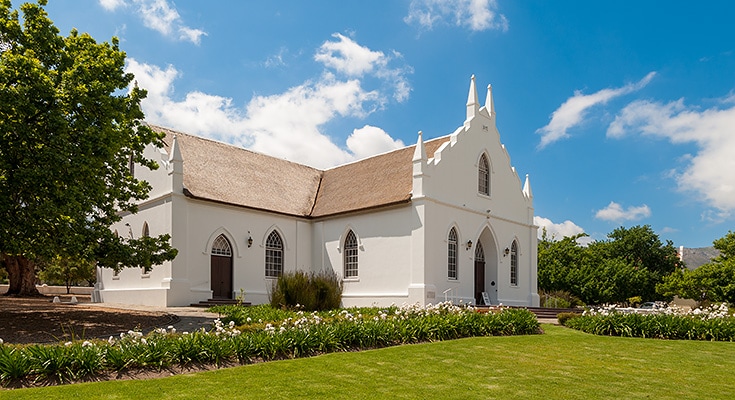
At the attractive Warwick Wine Estate, our small group is guided in a joint tasting by Bridgette, who seems to have rehearsed her script very well but doesn’t seem very engaged. After a short history about the Ratcliffe family and its pioneering women, we begin our tasting of four wines that have been selected for us by Bridgette.
Sadly, they don’t include a sparkling wine for which Franschhoek is famous. We start with the 2010 Professor Black Sauvignon Blanc (R95), which Bridgette tells us has lots of green aromas and flavours, but which, oddly, doesn’t smell all that fragrant or taste grassy to us at all, though we do detect some peach. It’s too light and is not very impressive.
Next up is the 2009 Chardonnay (R135), which has spent time in French barrels, as well as stainless steel, and we prefer this drop though it’s a very light Chardonnay and we’re not in love with it. I had so wanted to buy a bottle of white here, so that’s disappointing.
The reds are up next. The 2008 Old Bush Vine’s Pinotage (R95), Bridgette tells us, spent 15 months in French oak and will be much better in three years. It’s not as memorable as the Pinotage we tried at Fairview.
Finally, we sample the 2007 Warwick Three Cape Ladies (R105), a blend of Cabernet Sauvignon, Merlot and Pinotage, which Bridgette says was in French Oak for 24 months and can age for 5-6 years.
While the Warwick wines are drinkable, none of them really grab us and our little group is generally disappointed. We’re relieved it’s not just us. We had all hoped to buy some wines to take back to our Cape Town lodgings.
Much more impressive is the picnic lunch, which Carl informed us about in the vehicle on the way to Franschhoek, and invited us to select either a cheese and charcuterie board or a picnic basket, which he had to phone ahead and order. We opted for the picnic basket, which is actually a picnic board, and it’s fabulous.
Trust us, don’t even think about going here without getting the picnic ‘basket’ board. We get the cheeses and charcuterie that our companions get on their charcuterie and cheese boards. But we also get a selection of chutneys, pate, smoked salmon, couscous salad, a chicken salad, pesto, hummus and sundried tomatoes, a baguette, and chocolate brownies for dessert. We order a bottle of the Chardonnay, which tastes infinitely better with the food.
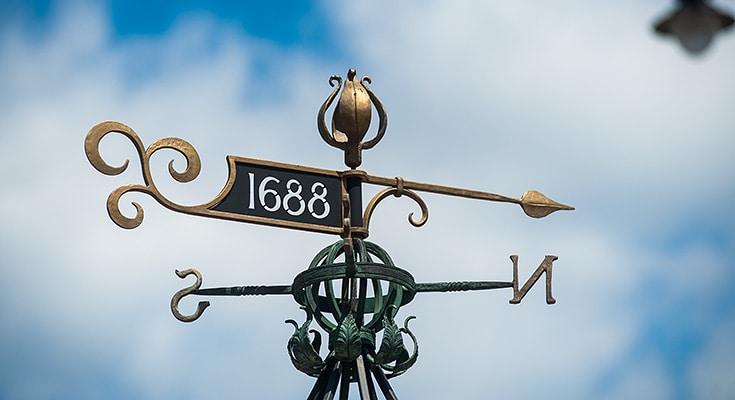
The winery staff spread out bright-coloured picnic cloths under a big umbrella on the lawn by the lake, and we all sprawl out while we eat our lunch and chat about how wonderful vacations are! Ah, if only they knew we were working!
The Canadian couple had just spent a few weeks on safari in Kenya. As that’s our next destination, we pick their brains. After an hour in the sunshine, grazing and sipping, and chatting with our new friends, we actually feel like we’re on holidays.
Waterford Winery at Stellenbosch
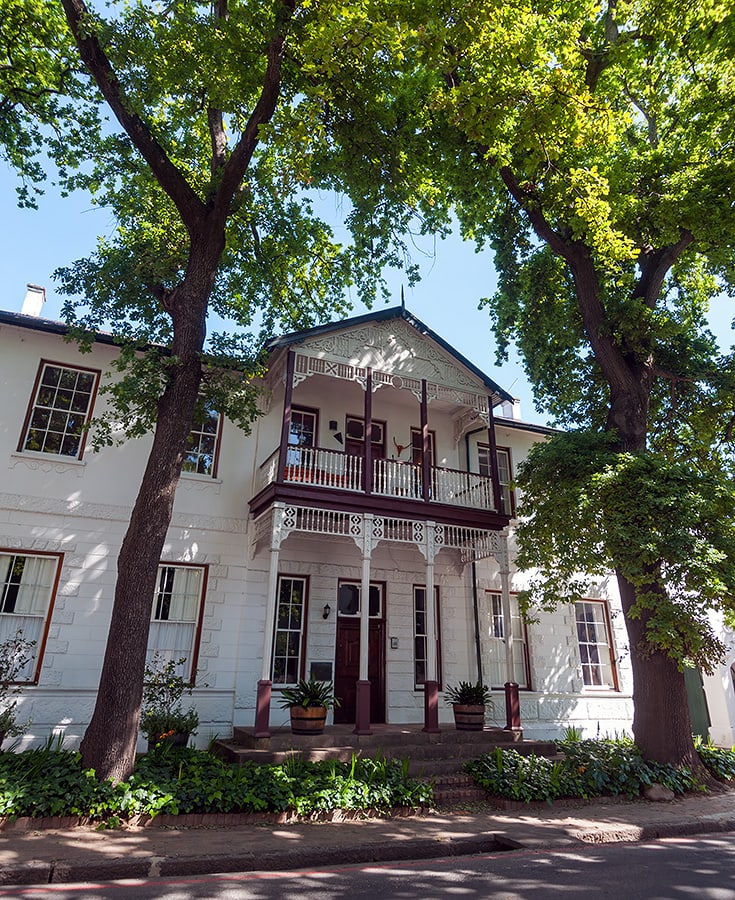
It doesn’t take long for us to reach historic Stellenbosch, a university town as much as a wine town, boasting splendid examples of Cape Dutch architecture shaded by colossal oak trees that line the streets – and yet another grand Protestant Church.
Again, we’re given just 20 minutes to take a stroll of the leafy streets of Stellenbosch, and as we wander by the charming whitewashed houses, including South Africa’s oldest house, I’m wishing we hadn’t in a way.
Stellenbosch is buzzing, with pavement tables outside the cafés crammed with chatty locals, and the many boutiques and antique stores busy with customers. We note how many good restaurants the town seems to have, and we’re wishing we would have had time to stay a night or two.
We move on to Waterford Wine Estate, our final winery for the day, which is absolutely beautiful. The lavender, stone building with courtyard, and interior filled with antiques, is very French, and reminds me of Provence.
Like Warwick, we’re presented with four pre-selected wines to try by a guy reading from a script and not the least bit engaged with his guests.
We try the Waterford Rose Mary, a salmon-coloured white wine made from red grapes, a blend of Merlot, Malbec, Grenache, Sangiovese and Shiraz. Unfortunately the wine tastes nowhere near as interesting as the idea.
Next, we’re given the Waterford Estate Sauvignon Blanc, a crisp, fresh, dry, almost chalky white with loads of acidity. It’s fine, but not to my taste. The 2007 Kevin Arnold Shiraz follows, which we’re told by our guy is a serious red but for us it lacks the richness and spice of a great Shiraz.
Finally, we’re poured a 2007 Waterford Cabernet Sauvignon. Stellenbosch is best known for its outstanding Cabernet Sauvignons and this one has been in French Oak for 27 months, and it is very good. Think leather, cedarwood, truffle, and mint. It makes me wish I was eating a big succulent, medium-rare steak.
Like the other four in our group, we’re underwhelmed with the wines and we’re all wishing we would have bought some wine from Fairview. We buy a couple of bottles from Waterford, just so we don’t leave the region empty-handed, even though they are the least impressive in our opinions, yet the most expensive.
We’re wishing we had our own wheels so we could zip back over, pick up a case, and do that cheese tasting while we’re there. Of course, we’re not sure who would drive given that we’ve all been tasting wine all day…
Our Verdict on this Cape Winelands Wine Tour
Our guide, Carl, was lovely and knew the Cape Winelands region well. However, as he admitted, Carl wasn’t a specialist wine guide. He was more of a facilitator, leaving us at each winery in the hands of the winery staff.
When the winery staff were engaged, as Jessie was at Fairview, the experience was so much more enriching and enjoyable. When staff weren’t all that interested or knowledgeable, the experience was disappointing and felt like time wasted.
In those situations, we would have benefited from having a wine guide with more of an interest and knowledge in South African wines who could have picked up the slack.
So if you’re keen to learn more about South African wine, and have time to tour the wineries, and are not so keen on racing through towns for a fleeting glimpse of some churches, then you need to find a different Cape Winelands wine tour. Or even better, stay in the Cape Winelands region.
If you’re tight on time and can only devote one day to the Winelands, and all you want is a taste of the region as much as South African wine, then this Cape Winelands wine tour will be just fine for you.
If we ever get back to South Africa and to Cape Town, we’d try to spend three days in the Cape Winelands (minimum), and at least a day and night in each of Paarl, Franschhoek and Stellenbosch, with a full day touring wineries in each destination, punctuated by sights, with time to meander the pretty towns post wine tour, and enough time allowed to dine at the restaurants. Next time!



Thanks for such a great overview of South African wine touring. I agree that a lot of wine tours (world wide) aren’t really wine tours but wine “shuttles.”
When someone books a wine tour, asking about the guide’s experience with wine, not touring, is an important question to ask.
Thanks, Robbin! Sorry I missed this one.
Great advice there! Thanks for dropping by!
I miss doing wine tastings! This post just really brought me back. Looks like you guys had a very full itinerary, but still managed to enjoy yourselves. Makes me want to go out and buy myself a bottle of wine!