Our Song Wat neighbourhood walk itinerary takes you on a leisurely stroll from Yaowarat, Bangkok’s Chinatown, through historic Song Wat — named after its hip main thoroughfare, Song Wat Road — and continues into the backstreets of arty Talat Noi to bustling Charoenkrung Road, Bangrak. If you’re a fan of good coffee, great food, especially street food, street art, design, all things vintage, and river vistas, you’ll love this stroll through some of Bangkok’s coolest areas.
Thanks for your messages and apologies for the dearth of posts. Terence has dengue fever and Lara is still in Australia taking care of her mum and had to take time off to focus on her own health. We have a massive backlog of posts we haven’t been able to return to in months we’re going to start sharing. As readers have asked if they should cancel their Bangkok trips due to flooding, we thought we’d start with this post. The answer is “no”; it’s monsoon, it rains and floods. Most of you seem to be travelling in dry season; you’ll be fine. If Lara owes you an email, she’s trying hard to reply next week. Thanks for sticking with us during these challenging times. Terence & Lara xx
If you’re heading to Thailand for the first time, you’ll want to spend your first day in Bangkok’s Old City gawking at glittering temples, cruising the Chao Phraya River, and eating your way through Chinatown. If it’s your second trip or you have more than a day in the Thai capital, we suggest you explore Bangkok’s secret river island, Koh Kret, get to lesser-visited floating markets, graze Wang Lang Market, and wander Song Wat, one of the world’s most fascinating neighbourhoods.
You’ll love Song Wat if you’re a fan of local travel and relish ambling local neighbourhoods as much as seeing the sights; if you delight in stumbling upon hidden temples, quirky museums and small galleries rather than queue for must-do shows at big museums; and if you prefer browsing idiosyncratic shops with curated collections of design objects, handcrafted jewellery and homegrown fashion, and cluttered stores brimming with vintage clothes, bric-a-brac and collectables to colossal cookie-cutter shopping malls.
If you like the idea of punctuating all that with stops to snap larger-than-life street art murals, snack on street food specialties made by the same families for multiple generations, sip good coffee at hole-in-the-wall cafes, down craft beers at secret bars, and savour relaxed meals of outstanding Thai food at waterfront restaurants with river views, you’ll love this Song Wat walk.
But before you scroll down to our Song Wat itinerary, we have a favour to ask. Grantourismo is reader-supported. If you find our itineraries helpful, please consider supporting our work: you could use our links to buy travel insurance; book flights, transport and accommodation on Booking.com, Agoda, Expedia, ebookers, CheapOair, Kiwi, Trip.com or Wotif; book transfers, tickets and tours on Get Your Guide; buy bus and train tickets on 12Go; or book a cooking class or meal with locals on EatWith. We may earn a commission, but you won’t pay extra.
Now let’s tell you all about the Song Wat neighbourhood and share our Song Wat walk itinerary.
Song Wat Neighbourhood Walk Itinerary from Chinatown to Charoenkrung Road
Before you make time for a Song Wat walk in your Bangkok itinerary, you need to know that while we love Song Wat, the riverside neighbourhood isn’t to everyone’s taste. I’m inclined to give you a heads-up because some travellers I sent to Song Wat weren’t fans: one reader found it “pretentious” (I’d called it ‘arty’), another thought it “fake”. I’d argue that Song Wat has gentrified more organically than many neighbourhoods in Southeast Asia.
Having said that, I have to confess we had a soft spot for Song Wat Road long before its transformation over the last decade, recognised by Time Out, which named Song Wat one of the world’s coolest neighbourhoods in 2023 — a year after Time Out bewilderingly placed our Siem Reap neighbourhood Wat Bo Village at #3 on their 2022 world’s coolest neighbourhoods list.
(Don’t get us wrong: we love the lush little Siem Reap student quarter we’ve called home since 2013. But one of the world’s coolest neighbourhoods it’s not. As you can guess, while fun to debate, we don’t have much respect for those lists; we wrote for Lonely Planet for years, so we know how these ‘world’s best lists’ can come about. But that’s another post.)
Regardless, if you’re only in Bangkok for a night or two, do consider whether Song Wat is your kind of neighbourhood so you don’t waste precious holiday time. We have friends in Bangkok — Thais, as well as expats who’ve lived in Thailand for decades — who mourn the loss of ‘old Bangkok’, loathe the relentless gentrification and development, and despair that everywhere is starting to look and feel the same as everywhere else.
Bangkok has changed radically since our first Thailand trip 26 years ago when neighbourhoods like Thonglor and Ekkamai off Sukhumvit Road were Bangkok’s coolest: in 2009 with the opening of Bo.lan and Nahm a restaurant revolution transformed Bangkok’s dining scene; a few years later the Chao Phraya Riverside renaissance began; the Silom-Sathorn regeneration was gradual — not as rapid as Chinatown’s Soi Nana, which saw a flurry of bars open a decade ago — as was the revitalisation of Talat Noi-Charoenkrung, kickstarted by 100 Mahaseth and 80/20 restaurants.
But perhaps no Bangkok area has changed as much as Song Wat and not everyone loves the direction it’s taken. My expat friend who moved from Singapore to Bangkok a decade ago “to escape the increasing same-y-ness of everything” told me: “cities around the world are so much more similar than different these days. I think it’s time to move home.” Sadly, she’ll find her hometown Melbourne hasn’t escaped the same homogenisation of style and aesthetics we can attribute to social media.
While I also have a fondness for ‘old Bangkok’, I disagree with my friend: Song Wat has a retro feel, creative spirit and quirky style that’s distinctly Thai — even when inspired by global trends, young Thais really make them their own. Song Wat also has some of the bohemian vibe and youthful energy that inner-city Sydney suburbs like Surry Hills, Darlinghurst and Newtown (our old stomping grounds when we were uni students) had in the mid-late 1980s and 1990s.
Song Wat’s rejuvenation has been grassroots-led, from within the community, and from the ground-up rather than top-down from government planners, tourism departments, and property developers. Song Wat Road is not one of those artificially-constructed ‘walking streets’ you see elsewhere in Thailand and other Southeast Asian countries.
Take Made in Song Wat, a collective of local creatives and entrepreneurs, most of whom are descendants of old merchant families. They’ve restored/remodelled their ancestors’ rundown warehouses and shops, establishing vibrant businesses and giving historic properties a new lease of life while invigorating the neighbourhood. They’ve also produced a Song Wat guidebook and are behind some of Song Wat’s most engaging events.
When Terence and I visited Bangkok on that first Thailand trip, we made a beeline for the Chao Phraya River, hopped on a ferry, and hopped off at Rachawong Pier for Chinatown. We were using a travel guidebook — this was well before Google Maps! — but instead of continuing as planned along Ratchawong Road the few blocks to Yaowarat Road, Chinatown’s main thoroughfare, we followed our noses and took a right onto Song Wat Road.
Back in those days, on that first short block between Rachawong Pier and Song Wat Road, there were a handful of street food stalls that set up for commuters during the rush hours. They sold cold drinks in plastic bags with straws; papaya salad to order; readymade stir-fries, noodles and rice dishes in styrofoam containers; and crispy-fried banana fritters wrapped in paper.
There was no air-conditioned Cafe Amazon (Thailand’s popular Starbucks-like coffee shop chain) nor a flashy youth hostel with polished concrete floors and faux colonial tiles. The cute minimalist cafe with terrazzo table tops selling Kyoto-style matcha lattes and grilled cheese sandwiches was definitely not there, and is another relatively recent addition.
At that intersection of Ratchawong and Song Wat Road, where we instinctively took a right instead of walking straight ahead, there was a beloved umbrella-shaded street food cart outside an old corner store that became a 7-Eleven, which would go on to become a destination for street food devotees like ourselves.
That push-cart sold and still sells some of the most addictively-delicious khanom jeeb, steamed pork and shrimp dumplings, sprinkled with crispy fried shallots, which Terence and I still seek out when we’re in Bangkok. In fact, some of the pop-up stalls and eateries I noted down on that first trip are still operating today and now considered iconic street food spots by Bangkok foodies. (The duck noodle soup and braised duck and rice are still excellent; order one of each.)
Beyond that intersection, there were none of the compelling shops that pepper Song Wat Road and its narrow alleyways today: no Australian-style third-wave coffee roasters, no Japanese matcha tea shops, no chic French pâtisseries, nor inviting Spanish tapas bars, New York-style pizza joints, and definitely no Thai-Canadian poutine spot — all of which make Song Wat Road such an engaging neighbourhood to explore.
On our inaugural trip, as we gobbled up khanom jeeb in the blazing sun, I gazed at the grand dilapidated building on the corner opposite that had seen better days. I remember the fusion of architectural styles intrigued me: it all-at-once reminded me of fairytale Russian wooden dachas and Baltic and Scandinavian country home,s with their ornate carved gingerbread fretwork and gable trim, and the traditional Islamic architecture of the Middle East, where we were living at the time, distinguished by protruding, closed-in wooden balconies with decorative mashrabiya screens.
The edifice was exquisite, even in its state of disrepair; history oozed from every paling. But sadly it looked like it could tumble down in a tremor or go up in flames in an instant — ironic, considering Song Wat was established as a new merchant district by King Chulalongkorn in 1892, after fire swept through nearby Sampheng, the main commercial hub at the time, destroying warehouses and wharves vital to trade between Bangkok, its coastal settlements, and wider region.
It’s that historic corner where our Song Wat neighbourhood walk itinerary begins. But first, a few practicalities and tips to help your itinerary planning if you like the sound of Song Wat.
Song Wat Neighbourhood Walk Itinerary Tips
Before you scroll down to our Song Wat neighbourhood walk itinerary, here are some quick tips so you don’t find yourself starting out on this walk in the scorching midday sun.
- Getting to the Song Wat neighbourhood. If you’re not staying in a Yaowarat Road hotel in Bangkok’s Chinatown, from where it’s a 5-10 minute walk to the Song Wat neighbourhood, you can get to Song Wat by ferry to Ratchawong Pier, near the start of our Song Wat walk itinerary; by underground train on the MRT Blue Line to Wat Mangkon Station (BL2) on Charoenkrung Road, Chinatown, from where it’s a 10-minute stroll to Song Wat; or use the Grab app to hire a tuk tuk or vehicle. Avoid hailing taxis or tourist tuk tuks to maintain your sanity and mood.
- Start at Ratchawong Pier and finish on Charoenkrung Road. Song Wat Road is just 1 km or so long, which is why after Song Wat Road our itinerary takes you onto Soi Phanu Rangsi to Talad Noi Museum, through Talat Noi neighbourhood along the back alleys parallel to Soi Wanit 2, via River City to Charoenkrung 30 (Charoen Krung 30 on Google Maps), finishing at Warehouse 30 off Charoenkrung Road. That second stretch of the Song Wat walk is another 1km-long 15-minute walk that could take anything from an hour or three, depending on stops.
- Looks can be deceiving — allow more time than you think you’ll need. Song Wat Road may be only 1 km-long from the intersection of Ratchawong and Song Wat Roads, where our Song Wat walk starts, to Thanon Khao Lam Circle, where Song Wat Road ends and Khao Lam Road begins. But while you could walk that in 15 minutes, there are so many spots to stop and linger on Song Wat Road and its many side streets and lanes (‘soi’ in Thai) that, depending on your interests, a Song Wat stroll could take 2-3 hours to half a day.
- Start your Song Wat walk in the morning or mid-afternoon. You don’t want heatstroke,so to ensure you’re not doing this Song Wat walk in the hottest part of the day, begin our amble in the morning or mid-afternoon. The advantage of a morning start is that you can join the locals for a street food breakfast. If you’ve only got 1-2 nights in the Thai capital and you’re spending the morning at Bangkok’s must-do Old City sights, start our Song Wat walk after lunch at a riverside restaurant.
- Take cover and stay cool during the hottest times of year. Do take your time doing this stroll, especially during the hottest part of the year (March-April). If you’re feeling overheated, slip into a cafe for a cold drink or ice-cream, cool down in air-conditioning, rest by the river for cooling breezes, or use Grab to book a ride to the next landmark en route. (See these tips for coping with a heatwave, which apply most of the year in Southeast Asia.)
- Book a restaurant in advance for riverside seats. Make a restaurant booking ahead of your Song Wat walk if you want waterfront seats, which, not surprisingly, are popular and nearly always taken. If you’re a lover of watery vistas and enjoy watching the action on the Chao Phraya River, it’s worth locking in a reservation for the views as much as the food. You’ll find our restaurant recommendations in our Song Wat itinerary below.
- Respect the privacy of residents. While many old shophouses and historic warehouses have been remodelled and transformed into cafes, shops, boutiques, galleries, bars, and restaurants, Song Wat, Talat Noi and Charoenkrung are still living-breathing neighbourhoods with local residents. Do respect their privacy when photographing the murals enlivening the walls of many buildings, some of which are people’s homes.
- Love the sound of Song Wat? Stay here or nearby to maximise your time. Check into Baan 2459, one of Bangkok’s most beautiful heritage hotels in a grand villa a 5-minute stroll from Song Wat Road; Loy La Long Hotel an atmospheric 3-star in a traditional wooden house; or Shanghai Mansion on Yaowarat Road, one of Bangkok’s best hotels for foodies, a 10-minute stroll from Song Wat Road. Alternatively, base yourself at one of Bangkok’s riverside hotels: stylish Sala Rattanakosin, near the Grand Palace, has breathtaking Wat Arun views; nearby, mid-range Arun Residence also has Wat Arun vistas; riverside Chakrabongse Villas, built by Prince Chakrabongse, is central and peaceful; elegant Praya Palazzo has a riverside pool; while opulent Mandarin Oriental is Bangkok’s oldest hotel. Love a holiday rental? Try Baan Songwat in a remodelled shophouse renovated by local designers.
Song Wat Neighbourhood Walk Itinerary
Our Song Wat neighbourhood walk itinerary takes you on a leisurely amble through the increasingly interesting, creative micro-neighbourhood of Song Wat, which has formed around Chinatown’s Song Wat Road. It then continues into equally fascinating Talat Noi, which lies between Chinatown and Bangrak, Bangkok’s oldest neighbourhood, where it ends.
Start: Corner Ratchawong and Song Wat Roads
Our Song Wat neighbourhood walk itinerary starts at the intersection of Ratchawong Road and Song Wat Road, home to some of Bangkok’s most iconic street food destinations, so make sure to sample some of Bangkok’s best street food to sustain you throughout your Song Wat walk.
Breakfast: Ah Liang Khanom Jeeb
Stop at Ah Liang Khanom Jeeb for some khanom jeeb (also written as khanom jib, khanom jip, khanom chip, and an array of other spellings), those addictively-delicious, handmade shrimp and pork dumplings, generously sprinkled with crunchy shallots, that Terence and I fell in love with on that first trip to Thailand. If you’re a fan of Chinese food, especially dim sum, you’ll know these tasty morsels as siu mai.
Still sold from the same decades-old cart under an umbrella outside the 7-Eleven on the corner of Song Wat Road and Ratchawong Road, they’re only available in the morning until sold out — which is one of the best reasons to begin our Song Wat walk early. Tip: as scrummy as the dumplings are, don’t fill up as there are so many more street food specialties to sample. Ah Liang Khanom Jeeb, 25 Song Wat Road, corner Ratchawong Road.
Eye Candy: Tuek Khaek
Do as we did all those years ago: while you tuck into your dumplings, take in the beauty of Tuek Khaek across the road. That’s the lovely building that first lured us down Song Wat Road, then a low-key neighbourhood of shuttered offices of importer-exporters and wholesalers, with cluttered Sino-Portuguese shophouses packed to the rafters with everything from textiles and spices to fishing rods and tackle.
A heads-up in case you’re heading to nearby Little India: ‘Khaek’ refers to ‘Indian’ in this context but literally means ‘guest’ or ‘visitor’ in Thai — which is why for many Indian-Thais, especially those whose families have been in Thailand for centuries, the term ‘khaek’ is considered racist. On the other hand, some Thais argue that ‘khaek’ is respectful and means ‘honoured guest’, just like ‘jek’ for Chinese and ‘farang’ for ‘Westerners’.
The ‘Indian Building’, also known as the Maskati Building, was constructed by the Muslim Indian-born textile giant Abdul Tyeb Maskati. That explains why the facade in its original form all those years ago had reminded me of traditional Islamic architecture.
Tuek Khaek has been restored in recent years — albeit, sadly, not as painstakingly as one would hope for such an architectural treasure. It’s unique details and character gone, the building has been painted in the same shades of every other restored heritage building in Bangkok’s Old City — lemon walls, pale mint shutters, dark green trim. At least the gem of a building has been saved from collapse or demolition.
These days, Tuek Khaek is used as a space for art installations and exhibitions during festivals and events, such as July’s Awakening Song Wat, a festival of light with the theme ‘SON(G)EVITY, The Longevity of Song Wat’, and Bangkok Design Week (BDW).
During BDW, Tuk Khaek was the location of an immersive installation on the history of textile trading in Song Wat, where visitors got to time-travel by using themed manhole covers to move around a playable life-size Monopoly-like board game called ‘Merchants of Song Wat’. If there’s an art show on at Tuek Khaek while you’re in the neighbourhood, do drop by to take a look inside.
Caffeine Hit: TAY Song Wat
Coffee connoisseurs and matcha lovers should call into TAY Song Wat. Everyone else: there are plenty of other intriguing beverages on the menu at this minimalist cafe to satisfy you if you simply want to sip a cooling refreshment. The Pink Guava Soda is popular, while the Tay Milk Tea is a best-seller. Or lick a cold ice-cream — creative flavours include calamansi chocolate, coconut caramel, and salt.
If you are serious about your coffee, order a hand drip made with Thailand-grown coffee such as the Chiang Mai Forest Bean, with flavour notes of mulberry, prune, coffee blossom, honey, and chocolate. And if you’re a matcha lover, there’s a whole matcha menu featuring ceremonial grade matcha. The Coconut Flower Clear Matcha is a must-try.
There’s a small display of baked goods under the glass counter, but the harder timber seats don’t invite customers to linger. If you’re already peckish, after your pick-me-up ask if there’s an exhibition on upstairs in the small gallery, then move on to a more comfy bakery, cafe or restaurant. There’s no shortage of spots to sip, snack or eat at in Song Wat, including our next stop! TAY Song Wat, 791 Song Wat Road. Open daily 9.30am-5.30pm.
Note: if good coffee is important to you, there’s no shortage of cafes in Song Wat serving up outstanding coffee. There are so many that you could almost do a self-guided coffee tour of Song Wat. We’ve got more cafe recommendations below, so do scroll down before deciding where to drop in if you can only handle so much caffeine.
Sugar Rush: Cache-Cache Pâtisserie
In Southeast Asia, our friends eat sweets at any time of the day or night. In Cambodia, it’s normal to snack on desserts before rather than after dinner, as we learnt on a Battambang street food tour many years ago, soon after moving to Siem Reap. So if it’s not too early for cake — what we Australians call ‘morning tea’ — slip down the alleyway opposite TAY to seek out this next stop.
‘Cache-cache’ means ‘hide and seek’ in French (from the verb cacher, to hide) and Cache-Cache Pâtisserie is secreted away within a large warehouse-like complex with a corrugated iron roof that’s the former headquarters of Chef Gin’s family’s peanut enterprise. However, for the European-trained Thai pastry chef, ‘cache-cache’ refers to the delicious surprise hidden within each of her exquisite Thai-flavoured French pastries.
If you struggle to find the elegant pastry shop-cum-cafe, look for the yellow illuminated sign and warm glow of light from the pâtisserie’s pendant lamps amongst the drab grey metal shutters. The first surprise once you arrive is the enormous glass picture window that wouldn’t be out of place in Paris. Not to mention the sleek, spotless, minimalist cream and white interior with its long banquette with cushions and classic Bentwood cafe chairs that evoke Viennese coffee houses.
Choose some pastries from beneath the glass domes on the counter and settle in to savour the sweet delights to a cool jazz soundtrack. While everything is divine, the picks of the menu are the signature Soleil de Songwat with a compote of tropical passionfruit and mango and lime chiffon within a melt-in-the-mouth Chrysanthemum mousse, and the pretty Émilie almond tart topped with kalamansi curd, almond cream, and fresh pomelo. Cache-Cache Pâtisserie, 878/2-3 Shun Lee Alley, off Song Wat Road. Open Wed-Mon 10am-6pm.
Shop: Vintage Stores Galore
Back on Song Wat Road, slip down the little alleyway on your left: on Google Maps it’s ‘A Nia Keng alley’ in Thai, and you’ll see it leads to Soi Maitri Wanit, written in English. If you’re a lover of all things vintage and prefer to participate in the circular economy rather than buy a tacky souvenir you’ll discard one day, there are a few hip shopping destinations on the narrow alley and further along on the lane.
First up is Songwat Thrift Store, which has the coolest souvenirs in their unique Bangkok t-shirts, a favourite with graphic designers for their funky typefaces. Other fantastic finds inside are vintage cameras, Japanese ceramics, and collectible toys, including cute kewpie dolls.
You can’t miss the neon-lit Pink Pvssy Vintage with its illuminated signs and enormous blow-up aliens. The speciality here is upcycled clothes and accessories, from pop art-style fashion featuring old denim, fabric ends, hand-painting, and embellishments to big colourful framed glasses, attention-getting jewellery and cute accessories that combine iconic Bangkok souvenirs like Thai silk elephants and tribal textiles in fun new ways.
Further down the lane, you can create your own Bangkok souvenirs at Lert.Songwat which has unique mementoes displayed in wooden glass cases, many of which are customisable. Our picks: the colourful canvas tote bags, caps, fans, and drink flasks. The food-themed stickers/magnets also make fun gifts and include noodle bowls, condiment caddies, Sriracha sauce bottles, stencilled trays, and Bangkok’s iconic blue and red plastic street food stall seats.
Slurp: Thai-Chinese Noodles
There are some excellent street food stalls on the same alleyway as the vintage shops above serving Thai-Chinese classics: Guay Jub Song Wat is famed for its bowls of gently spiced broth with rolled-up rice noodles (the guay jub of the title) while adjacent is Pra Ram Long Song, the name of the stall and specialty of the lovely cook.
Khao Phra Ram long song, which translates to ‘King Rama takes a bath’ but is shortened to ‘swimming Rama’, consists of tender pork strips doused in a rich, creamy, peanut satay-ish sauce, served atop steamed jasmine rice, with a side of morning glory (for refreshing contrast) and (for a kick of heat) a generous dollop of nam prik pao, a spicy relish of roasted red chillies, onion and garlic, which we call ‘chilli jam’ in Australia.
Back on Song Wat Road, look for the round sign above the entrance to the next alleyway for Nai Yong Fishball Noodles. This decades-old eatery serves a street food classic of bouncy fish balls with noodles of your choice: egg noodles, rice noodles, flat rice noodles, or rice vermicelli. Choose wet (in a clear soup) or dry (no broth), spicy or sour, and your choice of sizes (regular, extra, jumbo). My pick: spicy, dry, chewy egg noodles and extra fish balls. Addictively-delicious and super-affordable.
Sip/Snack: Coffee, Tea and Custard Tarts
Back on Song Wat Road again, take the next laneway on the left and look for the neon light shining from dimly-lit Local Boys Coffee Co (Mangkon Road, just off Song Wat Road), which, alongside a short menu of coffee standards (espresso, black, white, mocha) offers creative coffees such as peanut butter, ‘yuzu boom’ and coconut affogato, and sells cold coffees in cans and coffee beans.
If tea is more your thing, try petite Teanee & Treasures next door, which, to be honest, is a bit too shopping mall-slick for our liking, but offers reinvigorating ‘craft’ teas, from an Original Thai Tea and refreshing Peach Tea to a Biscoff Latte and a Coconut Matcha with Cold Foam. There are also creative coffees and a short list of sodas.
(If you were to follow this alleyway or the next parallel alleyway, Rong Khom, they’d lead you to the shops of the old Sampheng Market, which mainly consist of cluttered wholesale stores selling everything from cheap factory-made souvenirs to junky jewellery. Occasionally, it’s possible to find fun gifts but be prepared to buy a lot.)
If you’re up for another coffee or snack, return to Song Wat Road and take the next left onto Rong Khom alley, which is home to Song Wat Coffee Roasters. It not only has some of the best coffee in Song Wat, it also has some wonderful pastries to sustain you, and plenty of seating if need to rest your weary feet.
Along with classic coffees, there are ‘seasonal favourites’ like the Dirty Coconut (espresso poured over young coconut milk granita), a short list of matchas, and non-coffee beverages, such as a strawberry yoghurt drink. The popular pastries, which taste like they’ve just been pulled from an oven, include heavenly egg custard tarts, and a ‘pastry of the week’. Hope the smoked coconut pastry is under the counter when you drop by!
But before slipping down Rong Khom Alley, we have a couple more stops to note on Song Wat Road…
Shop: Song Wat Souvenirs
Garcon Dept (817 Song Wat Road) is the place to shop for quirky Bangkok souvenirs and streetwear. Expect everything from cheeky twists on the standard tourist t-shirts and baseball caps to colourful boxer shorts and the baggiest baggy trousers spread over three floors. Fun buys include ‘I Wanna Bangkok’ hand-bags and hand-fans to keep you cool, illustrated postcards and tote bags, and street food-themed stickers, buttons, and hair clips.
I’ve developed quite the collection of vintage stencilled enamelware since we moved to Cambodia, much of it made in China, and picked up from local markets in Siem Reap and Battambang; some bought directly from street food vendors (yes, the ladies think I’m nuts when I ask “how much for the tray?”). But long before Song Wat was hip and Chinatown had Michelin-listed street food stalls, on trips to Bangkok I’d poke around these backstreets seeking out Thai-made enamelware and Chinese restaurant-style bowls.
Siam Enamelware (821-825 Song Wat Road) is the headquarters of Thailand’s Rabbit Brand enamelware. Only open to suppliers and retailers once upon a time, it’s now possible to shop at their HQ, which opens to the public. While it’s still technically wholesale only, which means you need to be prepared to purchase a large number of products, that shouldn’t be so hard if you’re a passionate home cook, chef or food lover, and you’re shopping with friends.
It’s a great spot to pick up enamel metal trays decorated with pretty stencilled flowers (like these, against the wall, behind Pepper), colourful multi-layered tiffin boxes (like these), big stew pots with handles (perfect for cooking over a fire), and the kind of enamel soup bowls, spoons, plates, and mugs that we take camping in Australia. You’ll know you’re in the right spot when you see the colourful rabbit themed mural on the wall.
Located in a remodelled shophouse with polished concrete walls, FV (827 Song Wat Road) is a dessert cafe specialising in Thai takes on old-fashioned Southeast Asian sweets and beverages. These are the kind of traditional seasonal fruit-driven sweet treats I buy in Cambodia to savour with a pot of aromatic tea. It’s also a fab spot for edible souvenirs, such as Thai-style shortbread and tapioca coconut cookies in glass jars. They also sell the Song Wat guidebook and tote bags.
Pause: Secret Laneway Temple
Your Song Wat explorations don’t need an ‘eat, pray, love’ theme and you don’t have to be religious or even spiritual to slip down the next alleyway and under the red arch for San Chao Lao Pun Tao Kong temple to take in the colour, atmosphere, and rituals of local worshippers. Built by Chinese Teochew immigrants during the reign of Thai king Rama III (1824-51), the traditional Chinese Taoist temple comes as a surprise after all the cafes, shops, bars, and restaurants.
Sandwiched between Rong Khom Alley and the next alley off Song Wat Road, Trok Chaiyaphum on Google Maps, the grand grey-brick temple is fragrant with incense and enlivened by swinging red lanterns, carvings of blue and green dragons, murals of mythological scenes featuring cranes, lions, elephants, and lotus flowers, and statues of golden guardian dogs. The gilded Pun Tao Kong is the god who has long watched over Sampeng Market, and is found in temples and markets in Chinatowns across Southeast Asia.
There are temples dedicated to Pun Tao Kong in Chinese communities all over Bangkok and Thailand, but the Song Wat temple is the oldest shrine to the deity. By no means hidden to locals, the temple still feels like something of a secret to visitors to Song Wat compared to the more touristy Old City temples. A quick visit is a must, especially on Chinese holidays when it gets packed with locals burning incense, lighting candles, praying at the altar, and making donations.
Eat: Breezy Meals with River Views
If you’re ready for a proper meal at a casual restaurant with cooling breezes and river vistas, there are a few laidback Thai restaurants right on the waterfront on alleyways off Song Wat Road. For our first recommendation, you’ll have to backtrack a bit to Nai Yong Fishball Noodles and slip down the alleyway diagonally opposite, called Pao Prasit Alley.
Baan Rim Naam Songwat is located at the end of that alley, right on the riverside. A big, airy, unpretentious eatery with metal doors, concrete floors, high ceilings, and corrugated iron roof, it’s endearingly rustic and old-school, and is refreshing for that reason. Popular with Thais as much as tourists, it’s the kind of spot that’s easy to linger at for an hour or two and, unlike some other riverside spots, management don’t seem to mind how long you stay.
There’s a choice of seating, from bar stools right on the waterfront (better for sunset/evening; they’re too exposed to the scorching sun during daylight hours) to retro mismatched furniture (sofas, garden benches, bamboo chairs, and coffee tables). Though most customers prefer the traditional triangle cushions and low, round, rattan tables on colourful floor mats. Perfect for post-meal R&R. And if you really want to relax and treat your weary feet, there are massages on offer.
Expect classic street food cum home-style Thai food with everything from bite-sized miang kham, crunchy chicken wings, and huge grilled prawns to enormous serves of spicy som tum, plates of pad Thai noodles, crispy puffy Thai omelettes, and bowls of larb gai with steamed jasmine rice.
There’s no aircon, but there are fans fixed to pillars, along with hanging ferns. And there’s nearly always a cool breeze flowing off the river through the big open-sided space. Baan Rim Naam Songwat, 912 Song Wat Road; actual location at the end of Pao Prasit Alley, off Song Wat Road. Open Tuesday-Sunday, 1pm-10pm. Bookings: +66 (0) 99 142 5592.
Alternatively, if you can wait, there are a couple more cool riverside restaurants that’d we call ‘same same but different’ in Southeast Asia, just a 10-minute walk away on Khang Wat Pathum Khongkha Alley, near the end of Song Wat Road. If you can’t wait, you could always hightail it there and return to this spot post-lunch to resume your Song Wat walk.
One of Bangkok’s most charming restaurants to open in recent years, and more upmarket than Baan Rim Naam Songwat, Naam 1608 is another lovely spot for a leisurely lunch on the Chao Phraya River in a renovated old wooden house with breezy seating looking directly onto the river. We highly recommend booking waterfront seats, but it’s still worth going to if you can’t get a riverside spot.
The traditional Thai food is incredibly delicious and authentic, made to old ancestral recipes according to the staff, with a focus on high quality ingredients. Everything is good, especially the curries. You’ll also note there’s a short list of Italian pastas on the menu. Despite what you might think, these are aimed at locals and Asian travellers; take a closer look and note the Thai twists, from Spicy Spaghetti with Salted Fish to the Spaghetti with Roasted Duck and Sweet Thai Basil.
If you’re still full from grazing on street food, Naam 1608 is worth considering for an early dinner, which you should definitely try to coincide with sunset. Naam 1608, 1608 Song Wat Road; actual location on Khang Wat Pathum Khongkha Alley, off Song Wat Road. Open Tuesday-Sunday, 11am-10pm. Bookings: +66 (0) 91 936 1632.
With a similar waterfront location and more of the same relaxing river vistas and cool breezes, nearby Hansa River House* is just down the laneway, adjacent to riverside Loy La Long Hotel. Set in a refurbished traditional wooden stilted house, Loy La Long is one of Bangkok’s most atmospheric small hotels that feels more like a B&B.
Set in a big, airy, light-filled space, the streamlined design of Hansa River House tips a hat to that heritage architecture but is more contemporary in style. Note that Hansa River House is also a little more expensive than Naam 1608, but the Thai food is excellent and authentic, and worth the extra baht.
Order the lon poo (gently spiced crab dip), which comes with a plenty of crunchy veggies for dipping. The papaya salads are popular and the pick of the lot is the mixed seafood with vermicelli noodles, which is fantastic on a hot day; let them know what level of heat you can handle. Plump and sweet, the grilled river prawns with tamarind sauce are another speciality. The drinks are all wonderfully refreshing: try the lychee butterfly pea soda.
Hansa River House has a few rules, however: there’s a minimum spend (to deter people from lingering for hours on the same drink and not eating), and a two-hour limit (which is more than enough time for most diners, and again, it’s to deter people from sitting for hours on one drink). *Note: Hansa is temporarily closed for a brief renovation; I’m told they’ll be opening again very shortly. Hansa River House, 1616 Khang Wat Pathum Khongkha Alley, off Song Wat Road. Open daily, noon-late. Bookings: +66 (0) 96 128 2450.
Drinks or Dessert: More Views and Vibes
If you need a pick-me-up after a relaxing lunch, you’re up for dessert, or you’re not ready to leave the riverside views and cool breezes yet, we have options, near and far. Depending on where you lunched, you might not have far to go — or you might have to backtrack to the heart of Song Wat Road.
If you lunched at Naam 1608 or Hansa River House, and would like one more drink before you hit the road, you could drop into Samsara, in between the two restaurants. Also located slap-bang on the riverside in a similarly airy yet more rustic old wooden house, you can lap up the views and enjoy more cooling breezes as you sip a cocktail or craft beer. The spicy nuts are addictive, but the food is hit and miss.
If you don’t feel the need to backtrack to the heart of Song Wat Road and are ready to push on, then you could stroll the 500 metres to Hong Sieng Kong cafe (734, 736 Soi Wanit 2, Talat Noi). Walk back to Song Wat Road, turn right into Song Wat Road, and continue straight ahead until you reach Soi Phanu Rangsi; turn right into this lane, following it, and veering right when you reach a fork (the left prong is Soi Wanit), then turn left at the next fork onto Soi Chow Sue Kong.
Talad Noi Neighbourhood
You’re now in the adjoining neighbourhood of Talad Noi and your next stop will be ahead of you. The wonderfully atmospheric Hong Sieng Kong cafe is set in a 200-year-old refurbished Chinese mansion near the centuries-old Chow Sue Kong Shrine. The enormous airy cafe is decorated in vintage furniture and antiques and hosts art exhibitions and installations. It has a long menu of all kinds of creative cold and hot beverages and cakes, and is the perfect place for a pick-me-up.
After your refreshments, there are a few more interesting spots here, which you can really visit in any order as they’re only seconds apart.
Browse: Vanich House
Next door, Vanich House is another fascinating refurbished space in a former wooden warehouse that is now part cafe and creative shopping hub, with lots of cool artsy stuff for sale, but browsing is welcome, especially if you’ve been shopping en route and don’t have room in your luggage.
Pause: Chow Sue Kong Shrine
You could visit the often-busy, atmospheric Chow Sue Kong Shrine. This intricately detailed and colourful temple is always busy, especially on holidays, and during Chinese festivals when it’s the location of Chinese opera. If there’s a performance on while you’re in Bangkok, it’s worth returning for to take in what’s a very spirited, colourful and dramatic show that’s not for everyone, but I love Chinese Opera.
Ponder: Talat Noi Museum
If it’s open, you could slip into Talat Noi Museum, a wonderful little museum in a lovely shady waterfront setting, which tells the history of this community in a very striking, creative way. It’s well worth a look and doesn’t take long to visit. Update: Just before publishing this, I learnt that Talat Noi Museum is closed temporarily, so we’ll update that listing when it re-opens.
Gaze: Rooftop Vistas at River View Hotel
While you’re probably not ready for another cold beverage yet, make a note to return to the River View Hotel. There are breathtaking river views from the rooftop bar and restaurant. Open to non-guests, it still remains something of a secret, despite long being in the travel guidebooks. The views are truly jaw-dropping, so if you’re not ready for another beverage now, it’s worth returning here for sunset.
Continue ahead along the path to Duang Tawan Alley…
Inhale: Onest at Talat Noi
Drop into Onest at Talat Noi for beautiful fragrances for humans and their homes. The scents here are unique and yet very affordable.
Hang a right into the dog-legged alleyway that’s famous for its landmark ‘Antique Turtle Car’ on Google Maps and So Heng Tai House.
Gawk: So Heng Tai House
If it’s open, don’t miss the opportunity to call into So Heng Tai House for a look at this centuries-old Chinese house with a courtyard and swimming pool hidden behind mural-clad walls. It’s well worth a look! Leave a little donation in the tips jar.
Peek: Horseshoe Shrine
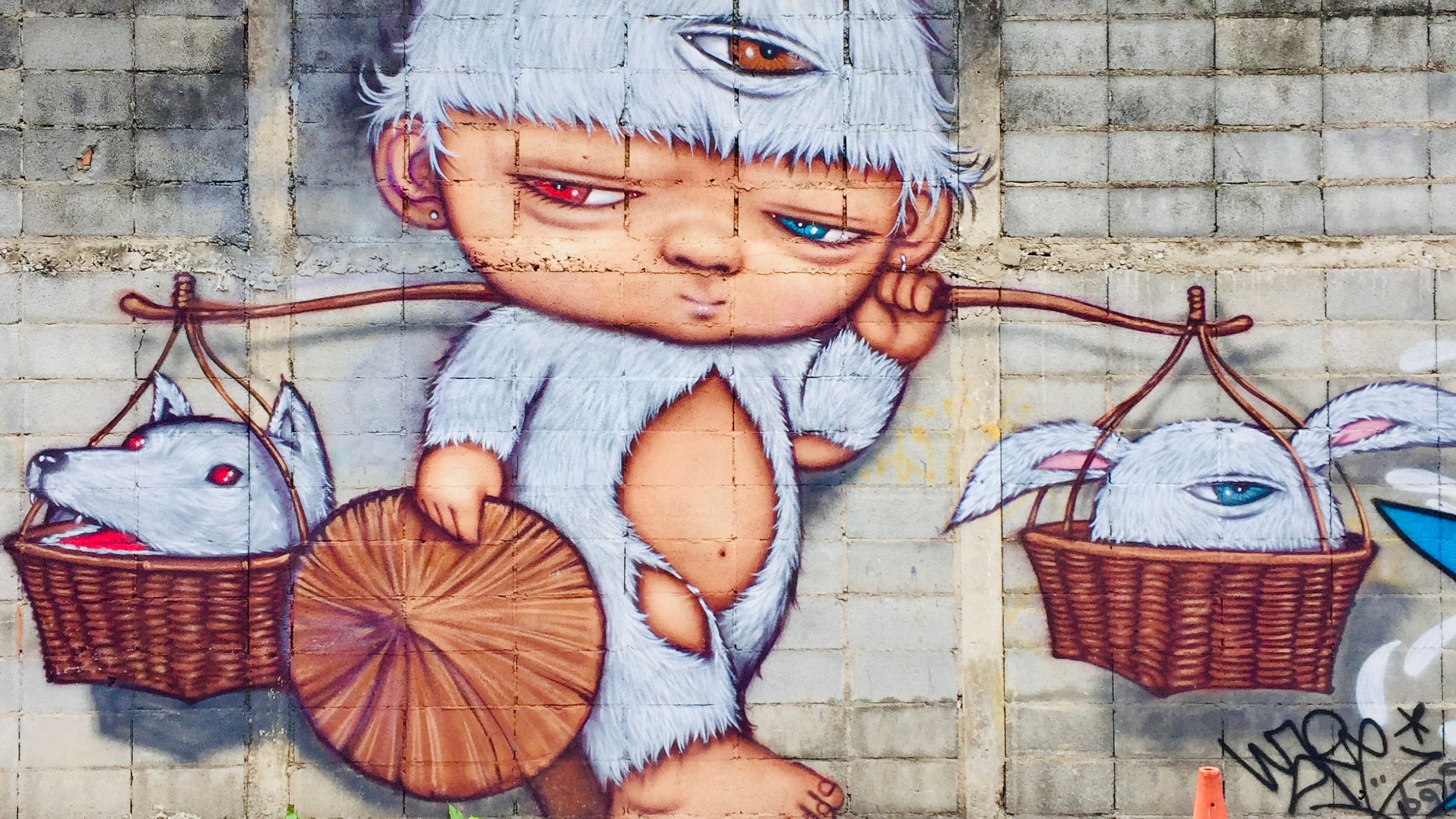
Continue straight ahead along the lane, stopping to admire the vibrant street art murals on the walls along the way, until you come to the corner, where you’ll need to hang a left onto Trok San Chao Rong Kueak alley. There you’ll spot another small atmospheric Chinese temple, Horseshoe Shrine, also worth a quick peek.
Sip: Mother Roaster
If your feet are feeling weary or you’re feeling the heat, and need a cooling beverage or caffeine hit, there’s yet another great cafe opposite in Mother Roaster, in a lovely wooden building.
Absorb: Street Art Galore
Once rejuvenated, continue along Trok San Chao Rong Kueak alley, where you’ll see murals galore enlivening the laneway walls. Much of the street art here is superb, so take time to stop and absorb the art. Small shops selling postcards of the art.
Sip: Blacksmith Cafe
Once you reach the intersection with Soi Wanit 2 there’s even more street art, more little cafes, and more fantastic street food, everything from dumplings and duck noodle soup to desserts. Blacksmith Cafe is the best spot for a cold drink or coffee.
Explore: 965bkk
You can’t miss 965bkk, opposite, in a wonderful big old mansion dripping with lush green vines and ferns, which serves as a cultural centre cum art space. It’s well worth exploring and having a wander around to take in the architecture and airy rooms, as much as the art on display.
Pause: Holy Rosary Church
After, stroll along Soi Wanit 2 and around the Bumblebee roundabout (on Google Maps) where you’ll see the entrance to the Holy Rosary Church, which dates to 1891 and was built by Portuguese Catholics. The striking interior is worth a quick look. Note: if you enjoy visiting churches, there’s another lovely church on the opposite side of the river in the charming little Portuguese neighbourhood, Kudi Chin. We’ll provide a guide to Kudi Chin soon.
Shop: River City
Continue on Soi Wanit 2 to River City, a shopping complex that’s home to antique shops, art galleries, silk/textile stores, and gift shops. River City once had a notorious reputation, as being a hub for stolen Cambodian archaeological treasures, but in recent years a new manager has been responsible for reviving the shopping complex, and injecting more contemporary art and style into the place.
There are clean toilets if you need a bathroom stop and the riverside cafe-bar Viva Aviv is a lovely spot to sit and enjoy a cold drink or chilled glass of wine.
When you’re done, cross the small bridge, where Soi Wanit 2 becomes Charoen Krung 30. Continue until you spot the elegant old Embassy of Portugal. Turn the corner and you’re at Warehouse 30.
Browse: Warehouse 30
If you’re up for more shopping or just a short browse, the stores at Warehouse 30 are worth a look for more contemporary art and design.
When you’re done, exit Warehouse 30 at the opposite end of the complex and hang a left onto the laneway of Charoen Krung 32, where you’ll find more street art, including a few famous murals, and some good street stalls if you’re feeling peckish again
Ends: Charoenkrung Road AKA Charoen Krung Road, Bangrak
When you reach the main road at the end of Charoen Krung 32 lane, you’re now on the legendary Charoen Krung Road itself, Bangkok’s first proper road and oldest road, which was once a canal.
You’re now in Bangrak, the oldest commercial district of Bangkok, where our Song Wat walk itinerary ends. We’re also going to provide a guide to things to see and do in Bangrak, so look out for that.
Where to next?
From the Post Office-cum-Design Centre on your right (also worth a look if you have the energy) it’s just over a 1km walk of around 15-20 minutes through the bustling heart of Bangrak to Sathon Road and, after you hang a right, to Saphan Taksin BTS, from where you can catch the Skytrain.
Beyond that, Saphan Taksin Pier, now called Bangkok Sathorn Pier, is where you can take a local ferry back to Chinatown or wherever you need to go, or take the hop-on-hop-off Chao Phraya Tourist Boat (more expensive) if you’d like a commentary.
If you’re still up for walking (well done!), there are some interesting old shops on the way to the BTS/Pier on Charoen Krung Road in Bangrak, including antique stores, souvenir shops, jewellers, bakeries, and historic eateries on the main road and side streets.
Hidden in the backstreets between Charoen Krung Road and the riverside is the Mandarin Oriental Hotel, one of Bangkok’s most luxurious hotels, which has a historic wing that’s home to the Author’s Lounge and a wonderful afternoon tea, along with the Bamboo Bar jazz bar. You can always pop in for a look; Thais are very forgiving of tourists dressed in their walking clothes :)
If you’re too tired, use the Grab app to take a tuk tuk to Bangkok Sathorn Pier or wherever you need to go. Probably back to the hotel for a nap!
If you’re heading to Thailand, do see our Asia travel checklist for things to organise for your trip. And please let us know if you do our Song Wat neighbourhood walk itinerary as we’d love to hear how you enjoyed it and would love to hear about any gems you discovered.