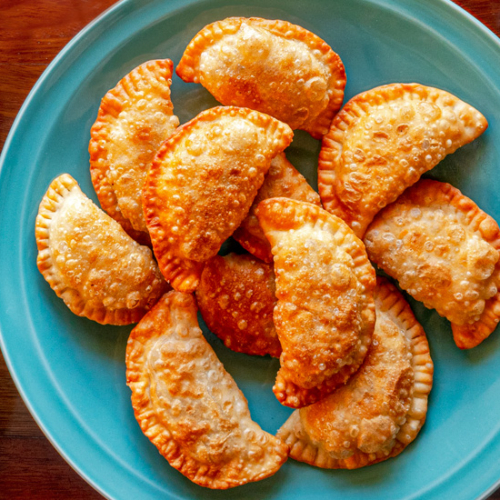
Spicy Ground Beef Turnovers Recipe for Mini Chebureki
This spicy ground beef turnovers recipe for mini chebureki makes a spicier, smaller, hand-pie sized version of chebureki, crispy fried pastries filled with cumin-spiced minced beef and onions, traditionally so large you need two hands to hold them. A delicious Crimean Tatar pastry, chebureki (чебуреки) are a popular street food snack in Russia,Ukraine, Central Asia, and the Crimean Tartar diaspora.
Servings: 12 Pastries
Calories: 157kcal
Ingredients
- 2 cups plain flour
- 1 tsp salt
- ½ cup water
- 2 tbsp vegetable oil
- 300 g brown onion finely diced
- 300 g fatty ground beef
- 1 tsp quality sea salt
- ½ tsp black pepper
- ½ tsp white pepper
- 1 tbsp ground cumin
- ½ tsp ground fennel
- ½ ground thyme
- ½ tsp ground paprika
- ¼ tsp chilli powder
- 4 tsp garlic powder
- ½ cup fresh dill roughly chopped
- Oil for frying
Instructions
- In a large mixing bowl, use a clean wet hand to combine the flour, salt, water, and one tablespoon of vegetable oil until you have a ball of dough.
- Sprinkle your work surface with flour and knead for a few minutes until you have a smooth ball of dough; if the dough is too sticky, add a bit more flour, or if too dry, add a little more water, but it should be just right. Return the dough to the bowl, cover, and leave to rest for an hour.
- Meanwhile, begin to make the spicy ground beef filling by frying the chopped onion pieces in a tablespoon of vegetable oil until soft and translucent, then transfer to a cold dish and set aside to cool down.
- Once the onion pieces are cool, transfer them to a clean mixing bowl, and combine well with the fatty ground beef, salt, peppers, spices, garlic powder, and fresh dill, to ensure all the ingredients are evenly distributed.
- When the dough is ready – it should be very smooth, soft and stretchy – sprinkle your work surface liberally with flour, rub a rolling pin with flour, then use the rolling pin to roll out the ball of dough quite thinly into one large sheet. If you don’t have much room, first separate the ball of dough into two balls, keep one covered in the bowl and roll out the other ball of dough.
- Use a pastry ring or rim of a glass that’s around 10cm/4in in diameter to cut circles in the dough, as close to eachother as possible, then use a teaspoon to scoop the spicy ground beef mixture into the centre of the circle, and carefully fold one side over the minced meat to form a half-moon shape, but before pressing the edges to seal.
- Press the edges down with your fingers until completely sealed. You shouldn’t need water to seal due to the texture of the dough, but if you find you do, just add a little water to a small dish and dip a finger in and rub it along the rim on one side of the circle only.
- Once sealed, press a fork onto the rim of the cheburek to form a continuous pattern, but take care not to press too hard so as not to create holes in the pastries.
- In a medium-sized frying pan or skillet large enough to hold a few pastries and turn them over with ease, pour in about 1cm-deep vegetable oil to shallow-fry your pastries. Heat the oil until hot – test it by dropping a tiny ball of dough into the oil; if it starts to spit and take on a golden colour, it’s ready – then fry the chebureki in batches for a few minutes or so, lifting one slightly to check the colour, then when golden turning it over to fry the other side for a minute or two. The second side cooks faster.
- Remove the chebureki and transfer them to a rack covered with absorbent kitchen paper, taking the pan off the heat at the same time so the oil doesn’t smoke and burn. If needed, turn the heat down a little, then fry the next batch of chebureki and repeat until they’re all done. Note: if you need to add more oil to the frying pan, ensure it gets hot before sliding the chebureki in, otherwise your pastries will absorb the oil and be greasy.
- When the last batch of chebureki is done, serve immediately while piping hot, garnished with a little fresh fragrant dill, and a dish of sour cream on the side.
Nutrition
Calories: 157kcal | Carbohydrates: 20g | Protein: 7g | Fat: 5g | Saturated Fat: 2g | Polyunsaturated Fat: 1g | Monounsaturated Fat: 2g | Trans Fat: 1g | Cholesterol: 18mg | Sodium: 410mg | Potassium: 167mg | Fiber: 1g | Sugar: 1g | Vitamin A: 214IU | Vitamin C: 4mg | Calcium: 26mg | Iron: 2mg