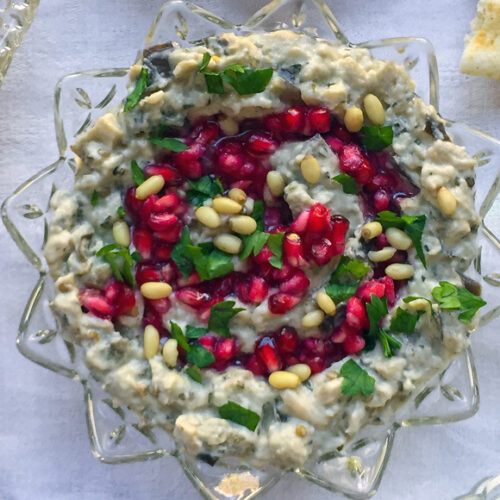
Eggplant Dip with Pomegranate and Pine Nuts for Baba Ganoush
Our recipe for eggplant dip with pomegranate and pine nuts makes the Middle Eastern mezze called baba ganoush using the old fashioned method – mashing it with a fork or pounding it with a pestle and mortar. The result is a more rustic textured dip sprinkled with pomegranate and pine nuts that’s eaten with flatbreads and an array of dips.
Servings: 4
Calories: 198kcal
Equipment
- Metal Skewers for Grilling
- Charcoal BBQ Grill
- Long Grill Tongs
- Mortar and Pestle
- Wooden Serving Bowl
Ingredients
- 2 eggplants large
- 2 tbsp tahini
- 4 tbsp lemon juice preferably freshly squeezed
- 2 garlic cloves minced
- ½ tsp sea salt or to taste
- 2 tbsp extra virgin olive oil or to taste
- 3 tbsp pomegranate seeds
- 1 tbsp pine nuts
- 1 tbsp flat leaf parsley leaves roughly chopped
Instructions
- Use a skewer to poke holes into the eggplants so they don’t burst, then roast, barbecue, grill or bake the eggplants over a live flame on a stovetop, grill or barbecue, or beneath an oven-grill (broiler) until the eggplant skins are blistered and charred and eggplant flesh is soft. Times will vary depending on method used, but could take 15-30 minutes.
- Using tongs, transfer each eggplant to a plastic bag, tie up each bag, and set them aside to rest so the steam loosens the charred skin, making the eggplants easier to peel.
- When the eggplants are cool enough to touch, use a tablespoon to scrape off the blackened skin, scoop out and discard the seeds. If the eggplant flesh appears wet, transfer it to a fine mesh colander and let it sit for 5 minutes or so to strain any juices, otherwise transfer the eggplant flesh to a bowl or mortar and pestle.
- To the same bowl or mortar, use a fork or pestle to mash or lightly pound the eggplant flesh until it’s soft yet remains rustic in texture. Add the tahini, lemon juice, minced garlic cloves, sea salt, and extra virgin olive oil, and continue to gently mash or pound until everything is well combined. Try it and adjust to suit your taste.
- Transfer the eggplant dip to a serving bowl, swirl a teaspoon from the centre of the dip in a circle or two, spoon the pomegranate seeds into the crevice, and sprinkle on the pine nuts and flat leaf parsley leaves.
- Serve with Arabic flat breads, crispy pita chips or crunchy vegetable crudités such as asparagus spears and carrot batons as a snack, with an array of other dips as a mezze spread, or alongside kofta, kebabs, chicken shawarma, or shish tawook for a side to Middle East mains.