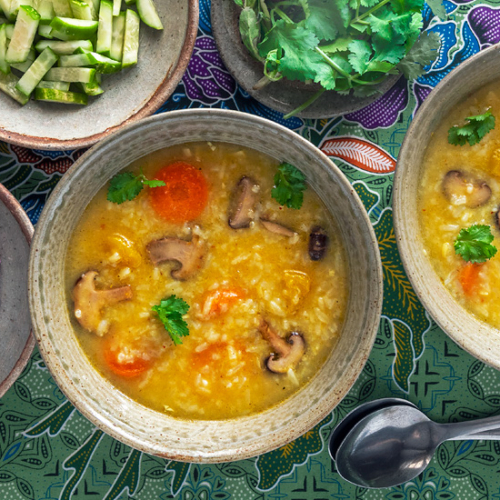
Cambodian Vegetable Congee Recipe
This Cambodian vegetable congee recipe makes a healthy vegetable-driven rice porridge or borbor in Khmer, with a base of kroeung, a Cambodian spice paste. Traditionally made in a pot on a clay brazier, over an open fire or on a gas burner, I’ve adapted the recipe for rice cookers. This is a vegetarian congee with tips for vegans.
Servings: 4
Calories: 481kcal
Ingredients
- 1 tbsp vegetable oil
- 2 tbsp kroeung paste – yellow kroeung
- 1 red chilli de-seeded, pounded or ½ tsp chilli paste (optional)
- 2 cups jasmine rice rinsed and drained
- water as per your rice cooker indicator
- 1 tsp virgin olive oil
Mixed vegetables
- 200 g pumpkin chopped into cubes
- 100 g sweet potato or taro chopped into cubes
- 200 g carrot sliced into rounds
- 1 corn cob kernels only
- 100 g mushrooms sliced into thirds
- 1 tsp prahok optional
- 2 tbsp fish sauce optional
- ½ tsp salt or to taste
- 1 tsp sugar or to taste
- 1 lemongrass stalk white end only
- 1 knob of fresh ginger chopped into 3-4 pieces
- 2 kaffir lime leaves
- 400 ml boiling water
Garnish
- 1 bunch mixed vegetables & herbs finely sliced cucumbers, snake/long beans, water lily stems, banana flower, rice paddy herb, edible flowers, fresh coriander
Instructions
- If you don’t have a jar of yellow-green kroeung in the fridge, you’ll have to make a batch of the Cambodian herb and spice paste first. See the recipe on the link above in the ingredients list.
- Heat the vegetable oil in a small pan or wok then fry two tablespoons of kroeung for a minute or two to wake up the flavours – when you can smell the aromas it’s done. If you like spicy food, you could add the pounded red chilli or chilli paste at this point but note that it will change the colour.
- Transfer the kroeung to the rice cooker, then add the rice, water as per the indicator line inside the rice cooker, olive oil, and the suggested mixed vegetables or equivalent vegetables of your choice.
- For a traditional Cambodian rice porridge, add the prahok and fish sauce, and salt and sugar to taste. If you’re making a vegetarian or vegan rice porridge, skip the prahok and fish sauce.
- Add the white end of the lemongrass stalk, ginger pieces and kaffir lime leaves, stir to combine well, closed the lid and turn on your rice cooker.
- When the rice cooker automatically turns off, leave to continue steaming for a few minutes, then open the lid, add 400 ml boiling water, stir in thoroughly, close the lid, and allow to cook for a few more minutes. (Note: the vegetables should be done, but if not done enough for you, transfer the congee to a pot to finish on the stove; the water will evaporate and the rice porridge will thicken, so you’ll have to add more water as necessary.)
- Serve in bowls with dishes of garnish on the side, such as finely sliced cucumbers, snake/long beans, water lily stems, banana flower, rice paddy herb, edible flowers, and a caddy of condiments, such as fish sauce, soy sauce, Sriracha etc for guests to customize their congee.